

Our Earth Day Festival Origins
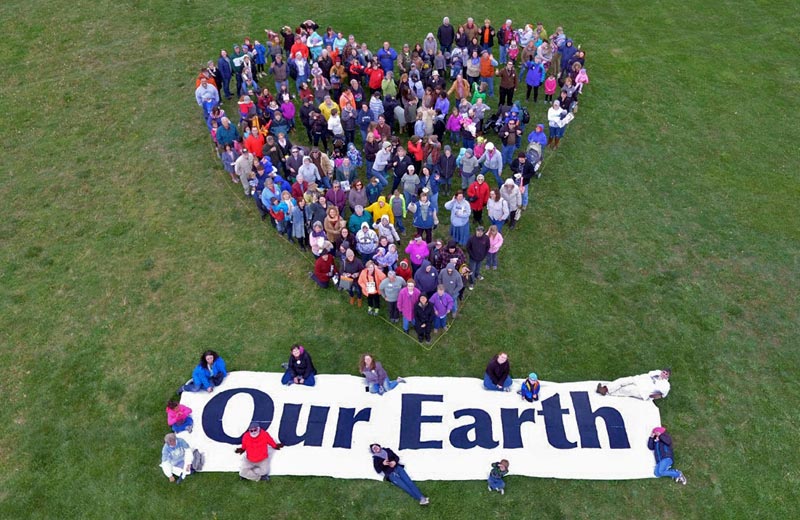
Since its inception in 1970, Earth Day has been part of the Saint Mary-of-the-Woods campus, with the Sisters of Providence of Saint Mary-of-the-Woods, Indiana, and students joining students from colleges, elementary schools, and more, across the country, participating in the Environmental Teach-In on the Crisis of the Environment.
In much the same way as that first Earth Day became a grassroots movement propelled by citizens in action, White Violet Center for Eco-Justice, a ministry of the Sisters of Providence, was also a response to this call to action by the Sisters.
With their mission of education and advocacy, their passion for social justice and good stewardship of the land, White Violet Center was founded in 1996 by Sister Ann Sullivan, SP, to address these environmental concerns and partner with others to teach how to care for all creation.
In 1999, White Violet Center hosted its first public Earth Day celebration in the space around a beautiful old greenhouse in a parking lot with a few tents.
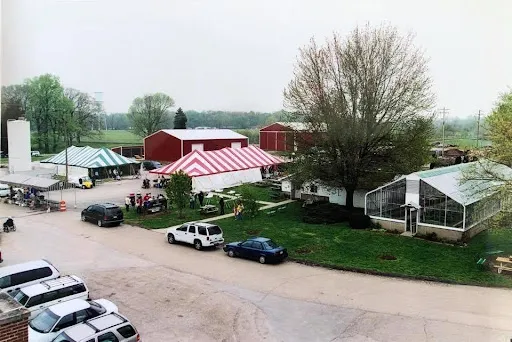
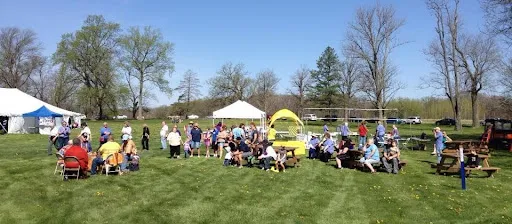
Now as we head into our 28th anniversary, we are recognized as the longest running Earth Day Festival in the state. We have seen crowds of up to 1,200 and more (on those occasions with really good weather).
We have had educational and local vendors that have been with us for more than a decade (maybe two) and folks tell us that they used to come to Earth Day as kids and now they are bringing their own children. We are always delighted to add more vendors and fun activities for the whole family.
Our Earth Day is great for kids and adults alike, giving both an opportunity to come together to celebrate all the amazing things our planet does for us and to educate on what we can do if we take action together to build a stronger, healthier future for our planet. Forming connections and good memories with nature, and your community, is one of the best ways to ensure that future generations will have the desire and motivation to take care of this place that we call home before it is too late.

Each year EARTHDAY.ORG has a theme and White Violet Center will often use that to shape some of our education workshops or vendors, but sometimes we create our own. This year, in partnership with Indiana State University’s Office of Sustainability, our theme is Leap Into Action.
This brings to mind the old fable of the frog that is sitting in a pot with water. If the frog is put into boiling water, he immediately jumps out recognizing the danger.
However, if it is cool water with the temperature gradually turned up to boiling, he doesn’t perceive the danger and by then it is too late. Earth Day has always been about a call to action. How can we recognize and make changes? Are there groups and organizations that I can join or support to create the change we need?
What information is out there about clean energy, carbon footprints, renewable energy, and the list goes on and on. Earth Day is a way to get those answers, but in a way that should feel fun and relaxed, knowing that you are in connection with folks that feel the same in your community.
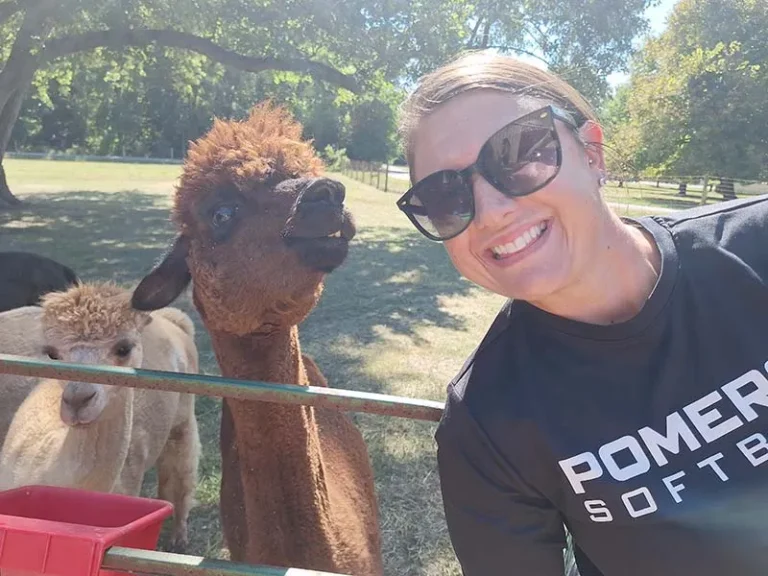
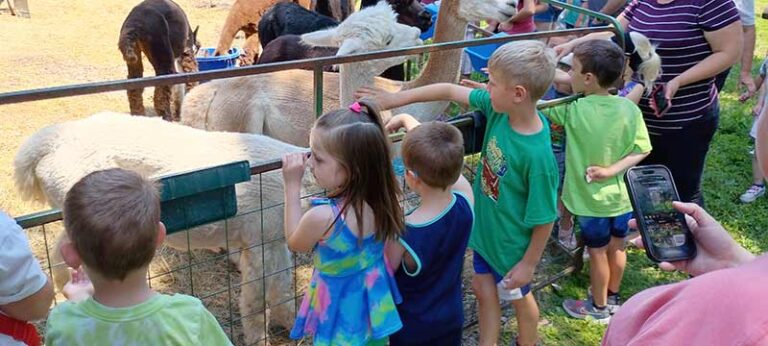
We can address and teach these important concepts, while also having everyone ooh and aahh over alpacas, hawks, goats, and … an armadillo???
We hope you will join us for a day of celebration the weekend before Earth Day, on Saturday, April 18, from 11 a.m.-3 p.m. near the Lodge at the O’Shaughnessy Dining Hall as well as on Earth Day itself, April 22, from 11 a.m.-2 p.m. on the campus of Indiana State University.
Take action with us as we continue this legacy and keep the movement alive!
A brief history of Earth Day
Sept. 27, 1962: Rachel Carson’s book Silent Spring Release Date (after a 3 part series appeared in the New Yorker starting in June of 1962).
January 1969: Massive Oil Spill in Santa Barbara, California inspired Junior Senator Gaylord Nelson to recruit Congressman Pete McCloskey and 25 year old graduate student activist from Harvard Kennedy School Denis Hayes to organize campus teach-ins around the country.
January 1970: Denis Hayes is selected to be the first Earth Day organizer after Nelson and Hayes realize the potential to bring together many small groups trying to advocate for better protections for the environment and communities.
April 22, 1970: The first Earth day celebrated in over 2,000 colleges and universities, 10,000 primary and secondary schools, and hundreds of communities around the country. It is believed that 20 million demonstrators participated.
Dec. 2nd, 1970: Capitalizing on the momentum of Earth Day and to address the public concern for environmental reform, Nixon created the Environmental Protection Agency (EPA) and started regulations to implement clean air and water protections, banned DDT, and phased out leaded gasoline.
1980s: More substantial regulations were enacted including the “Endangered Species Act, the Marine Mammal Protection Act, Superfund, Toxics Substances Control Act, the Resource Conservation and Recovery Act, and of course the Clean Air Act and Clean Water Act.” (Source: The History of Earth Day).
1990s: Denis Hayes is again asked to lead an Earth Day movement to globalize environmental protections and awareness worldwide with over 200 million people participating in 141 countries.
1992: The first Earth Summit in 1992 in Rio De Janeiro with a focus on recycling and global pollution leading to the depletion of the Ozone Layer.
2000s: With the help of the internet to mobilize environmental groups world wide, 184 countries participated in the largest grassroots campaign, once again led by Denis Hayes, to focus on global warming and clean energy initiatives.
2010: Almost 1 billion people participated with over 20,000 partners rallying for “green” economies and reduction of carbon footprints
2020: Although Covid reduced the number of public celebrations and rallies, there were Earth Day actions online through various environmental organizations that over 1 billion people participated across the globe causing it to be “the largest online mass mobilization in history, according to ” EARTHDAY.ORG.

Neat stuff! Thanks for this information. 😀