

July 5, 2026: Fourteenth Sunday in Ordinary Time
Gospel: Matthew 11:25-30
At that time Jesus exclaimed: “I give praise to you, Father, Lord of heaven and earth, for although you have hidden these things from the wise and the learned you have revealed them to little ones. Yes, Father, such has been your gracious will. All things have been handed over to me by my Father. No one knows the Son except the Father, and no one knows the Father except the Son and anyone to whom the Son wishes to reveal him.
“Come to me, all you who labor and are burdened, and I will give you rest. Take my yoke upon you and learn from me, for I am meek and humble of heart; and you will find rest for yourselves. For my yoke is easy, and my burden light.”

Reflection
Our Gospel passage today follows a time of intense conversation between Jesus and the religious leaders. Despite the forceful resistance Jesus experienced, we find at the beginning of this periscope, that he moved from responding to the many voices of opposition to offering a prayer of praise of his Abba.
He extols the wisdom of God who chooses those with an innocent, childlike spirit to receive Divine grace and guidance. Those who approach God with humility and a trusting heart, he says, experience union and mutual joy.
Jesus, who had identified himself through his relationship with his Abba, then issues an invitation to those who wish to enter into a special relationship with him. His words, “Come to me” imply that a response is required. For the people of his time, the image of a yoke carried significant meaning. When two oxen are yoked together, pulling a plow or wagon and furrowing the land, they must keep to the same pace, exert a balanced amount of energy and proceed toward the same goal.
Jesus offers his yoke and his company, side by side to the one who freely accepts his invitation. And the Yoke’s burden? It is that of Jesus and he assures us that it is light and will lead to a restful experience.
How do we, living in the 21st century, understand this passage and accept the invitation? In the parlance of current everyday life, what is in it for me? As I see it, Jesus wants to accompany us on our life’s journey.
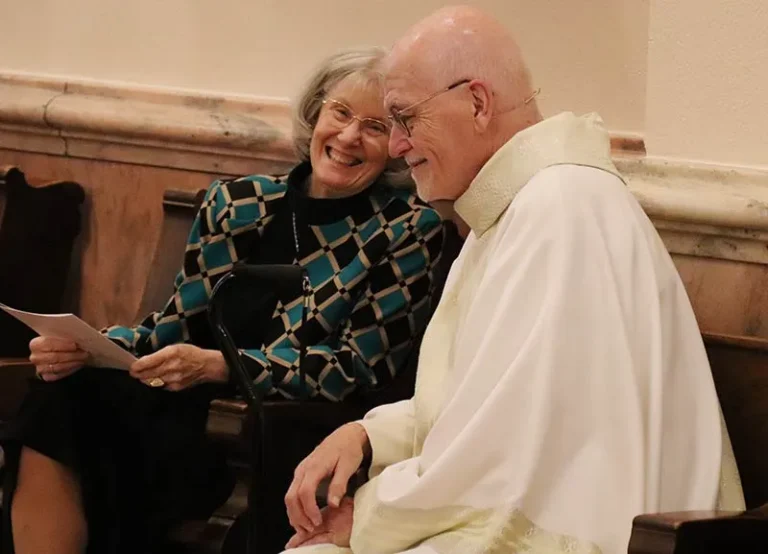
Any burdens that “own us now,” we would renounce and share the burden and Jesus’ yoke. In our contemporary understanding, taking on his yoke symbolizes partnership or synergy with Jesus, being a “power couple.”
He offers his guidance and we can learn from him, share in h is way of life through the Beatitudes, be side by side with him in all that we think and do. Bearing his yoke is never being alone.
It means being yoked, not to the things of the world, not to activity, but to him, in all we possess and do. It calls us to be aware of the yoke to which we are presently bound and decide which yoke we wish to claim.
If we choose to walk yoked to Jesus, we gain a new faith perspective. It focuses the direction of our journey and the company that we keep. Being yoked to Jesus can keep our gaze on what is essential in light of the Reign of God.
Action
Pray the Suscipe of St. Ignatius Loyola
Take, Lord, and receive all my liberty, my memory, my understanding, and my entire will, all I have and call my own. Yu have given all to me. To you, Lord, I return it. Everything is yours; do with it what you will. Give me only your love and your grace, that is enough for me. Amen.
Listen to and pray with Handle’s Messiah, No. 21, the Chorus

Love the “power couple” image!
Your reflection shares with all of us a wonderfully digestible and desirable understanding of the word yoke.
Thanks for sharing.