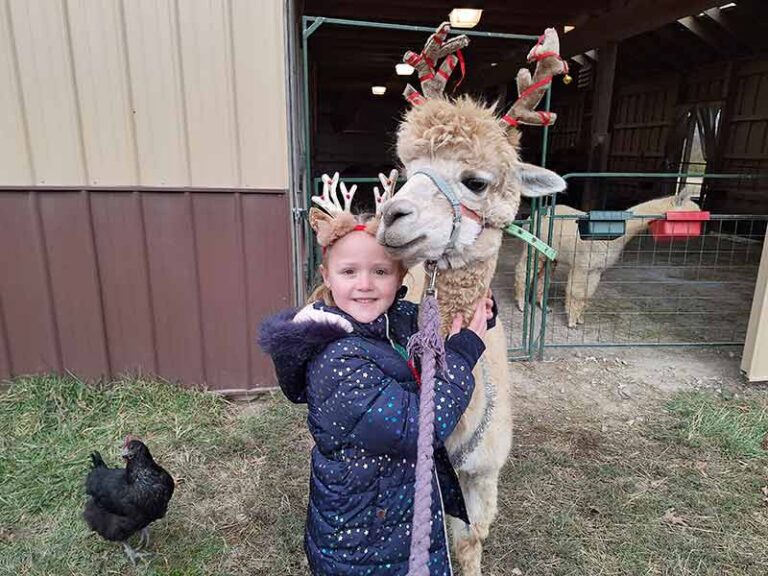
Before coming to work at the White Violet Center for Eco-Justice, a ministry of the Sisters of Providence of Saint Mary-of-the-Woods, Indiana, my passion for growing food and living in reciprocity with the land was sparked as a backyard gardener.
With a few years’ experience as an avid home grower, I thought, perhaps naively, that moving on to small-scale farming would be doing much of the same, just … bigger.
While the most obvious difference between the two modes is doubtlessly scale, I have learned along the way the difference scale can really make.
I started dreaming of growing food when living in shoebox-sized Chicago apartments, growing everything I could fit on fire escapes, balconies and in window boxes. During the height of the COVID pandemic in 2020, my husband and I moved from Chicago to Nashville and had a home with a yard for the first time since our childhoods.
Whether because we were a little stir-crazy by that time, or had been dreaming of the possibility for so long, when we could finally dig into the soil in Nashville to get started on a garden in earnest, we really went for it.
Over the winter of 2020-21, we enrolled in the local Master Gardeners’ course for some classroom learning and began removing sod and layering compostables like newsprint, dried leaves and other organic matter to begin decomposing in place and feeding the soil to prepare for a spring planting (this method is called “lasagna gardening”).
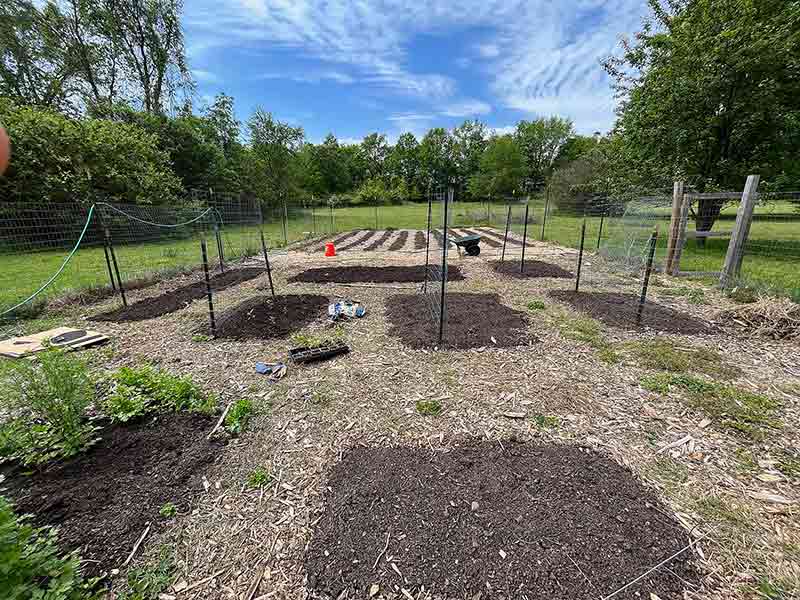
Over the course of three years on the property, we cultivated nearly 2,000 square feet of growing space in our yard. We grew way more food than we could handle as a family of two and quickly turned to learning food preservation, sharing with friends and donating the surplus.
Even so, the 1/20th of an acre those 2,000 square feet equate to pales in comparison to the 2.5 acres of active growing space on the White Violet Farm (by more than 50 times!).
While 2,000 square feet in my backyard produced more food than we could handle, the garden was a hobby that we could balance between two people and our full-time jobs. On our evening stroll through the plants, we could get eyes on nearly everything growing to see how the plants were doing, what beneficial insects and pests were visiting, and where there were early signs of struggle.
When you have 12 total pepper plants, it’s not too difficult to notice quickly when one is being inundated with eggs or hatching aphids, and treat early with a hands-on solution like spraying down the leaves of each affected plant to remove insects and applying neem oil after sunset to prevent the sun from reacting with the oil and burning the foliage.
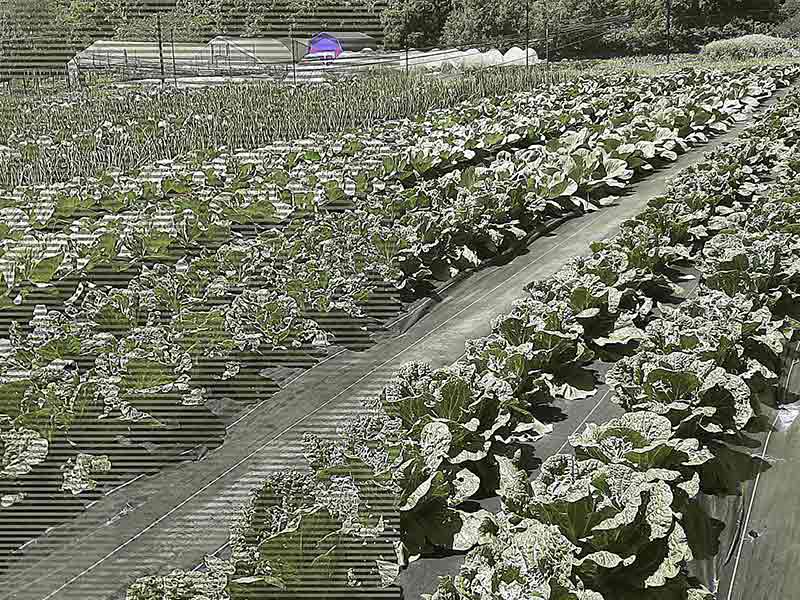
When you scale up to the nearly 575 pepper plants we grew at White Violet Farm in 2025, peppers being just one of more than 30 different crops on the polyculture farm, noticing every little change and reacting early is not just infeasible as a broad solution, but impossible.
Reactive strategies become back-seat measures to preventative holistic strategies. We rely on good soil management practices and crop rotation so that a strong, healthy soil ecosystem may produce strong plants with more resilience to pests and disease.
We encourage beneficial insects, not just pollinators but predator insects that keep insect populations that commonly damage plants in balance and apply physical barriers like mesh netting to rows of crops especially susceptible to insect damage. At scale, the age-old adage is especially true – an ounce of prevention is worth a pound of cure.
As a team, White Violet Center typically has four to 10 farmers tending those 2.5 active acres of produce (as a teaching farm, we host interns that come here to work and learn the methods we use in certified organic production, so the number fluctuates throughout the seasons and years.).
Compared to my backyard garden, that means the farm team is working 50-times the growing space, with only 2.5-times the people. Not to mention that the farm team is also spending time caring for White Violet Center’s herd of alpacas and flock of chickens raised for egg production! Holy livestock!
Just based on numbers, it’s easy to see why it’s impossible to keep eyes on every plant, every day. But it’s not just labor hours that scale from the backyard setup to the farm, it’s the creativity and brainpower of those people that makes a difference.
In our backyard garden, we loved to reduce waste and keep costs low by using scrap materials to build trellising, borders and other infrastructure. It was fun to head into the garage, pull out some tools, scrap wood, and hardware and create a solution for tomatoes that had overgrown their cages, or supports for beans that turned out to be of the vining variety instead of bush-style like we thought (oops!).
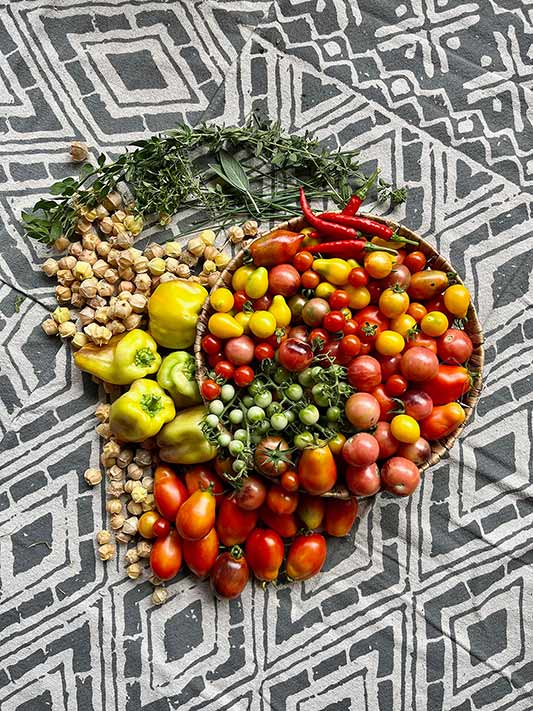
While the infrastructure we use on the farm is more of the tried-and-true variety than the cobbled-together one, ingenuity still applies. Instead of the brainpower of two, we have folks coming together with diverse backgrounds all contributing.
In 2024, one of our team members, Libby, had the idea to repeat the trellising and pruning style we used for our indeterminate (vining) tomatoes in the high tunnel for our cucumbers a well, similarly vining plants. In 2025, the change in trellising resulted in less powdery mildew because it increased airflow around the plants and we saw a significant increase in cucumber production.
Whether it’s an intern with a theatre set-building background contributing to a carpentry project, one with event experience recommending ideas for an event market booth, or just more brains involved in the classic brainstorm, having a team with a host of diverse experiences on the farm makes the team stronger.
As we scale up from backyard gardening to small-scale farming in inputs, we see a dramatic increase in output. As I mentioned (and as anyone who has ever planted more than one zucchini plant in their home garden knows), our backyard garden produced more food than we knew what to do with.
In addition to pickling, drying and sharing, we were able to donate surplus produce to a local non-profit animal sanctuary that took care of rescued and retired livestock animals. It brought us joy to share our bounty with others working to care for creatures, even if it was a couple of deliveries per season.
While we didn’t weigh the deliveries, they couldn’t have totaled more than 100 to 200 pounds per year at most. In addition to selling produce at the Terre Haute Farmers’ Market and in the White Violet Farm Store, the team at White Violet Center is supplemented by fundraising and grants (it really does take a village!) that enables contributions to local food pantries.
From 2023-25, the team was able to donate more than 23,000 pounds of fresh organic produce and pasture-raised eggs (totaling a retail value of more than $82,000), more than 10,000 pounds of food donated in 2025 alone. Especially at a time when demand at local food pantries is sky-high, the impact the team is able to make is incredible.
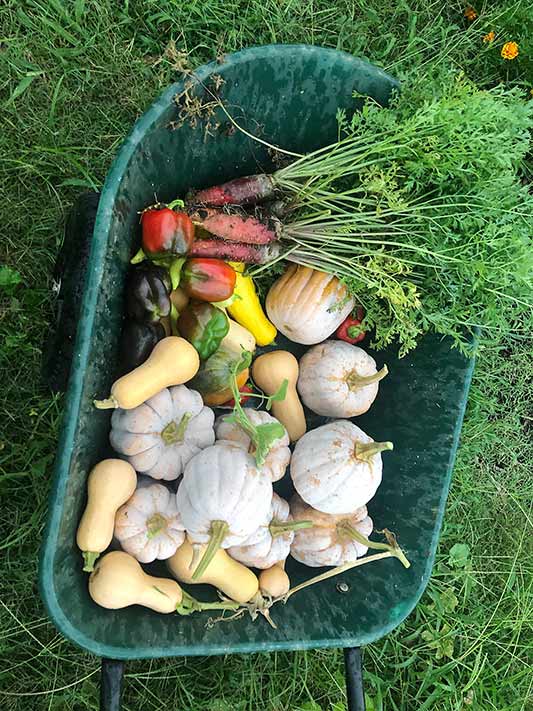
As a farmer, I still keep a backyard garden at home (albeit, much smaller than 2,000 square feet these days). I love working with nature to co-create something that nourishes both my spirit and family and hopefully leaves my little plot of earth in better shape than I found it.
I encourage others to get their hands in the soil at whatever scale fits their lives at the time. Across my time in window boxes, backyard gardens and small-scale production farming, I can attest it’s all worthwhile.
Being a part of a bigger team that is able to scale up both the contributions to the community and the environment, though, is truly humbling. Together, we can accomplish dramatically more than we could if each of us was doing the same work alone.
And just add time. Even more amazing is the collective impact of 30 years of White Violet – on the community, on the land and on the people who have been a part of the legacy along the way.