I love that my work at White Violet Center for Eco-Justice (WVC), a ministry of the Sisters of Providence of Saint Mary-of-the-Woods, Indiana, brings two passions of mine together – fibers and farming.
In fact, it was the combination of these two arts that attracted me here 21 years ago. Most of the time, my work has me squarely in one area at a time. I’m usually inside, working on fiber projects in the late fall and winter months, and in the field the rest of the time.
Working with natural dyes, however, bridges these parts of our operation in a beautiful, colorful way.
Before I came to WVC, I lived in Bloomington, Indiana, where I developed my fiber arts skill set. Former Bloomington institution, Yarns Unlimited, was a haven for all things fiber. There, I vastly expanded my knitting skills, learned how to weave from Suzanne Halvorson, and how to spin and dye from Robin Edmundson using acid and fiber-reactive dyes.
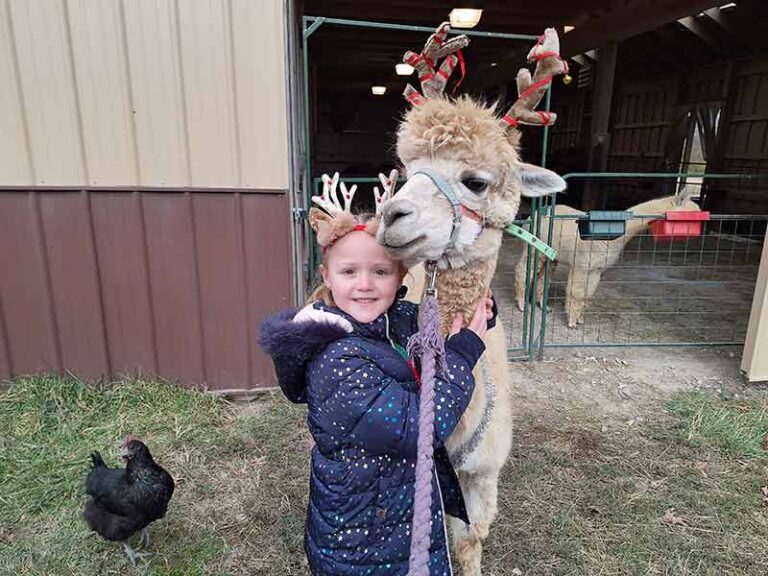
For a while, our herd was heavy on white animals. We tried to breed for more color in our herd, but we kept getting white and fawn colored animals. Humans can do their best to pair breeding animals with a hope of getting a cria in a certain color family, but nature will do what it wants.
This glut of white yarn, coupled with years of customers asking if we ever dye our yarn, sparked the idea to try dyeing some of it.
I reached out to Robin Edmundson gain to see if she could give me any tips on natural dyes as I started to set up our little dye operation. She kindly mentored me on creating a line of naturally-dyed alpaca yarns for WVC, giving me so many of the crucial skills that I use today. I will forever be grateful to her.
Eventually, we unveiled our first assortment of naturally-dyed alpaca yarns in 2018 and have been dyeing small lots ever since.
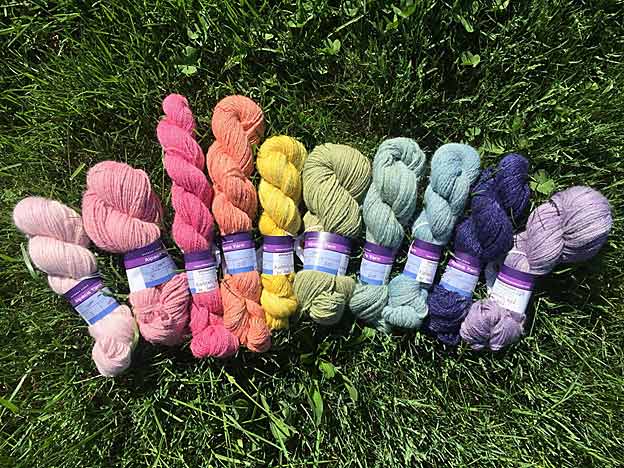
While acid and fiber-reactive dyes yield tons of vibrant colors, I wanted a dye process that would be non-toxic, gentle on the fiber, and utilize the variety of plants on the farm.
Natural dyes allow us to create yarns that are truly of this place – fiber from animals that graze our pastures and colors from plants and materials grown and gathered in these fields. This fits perfectly with our mission.
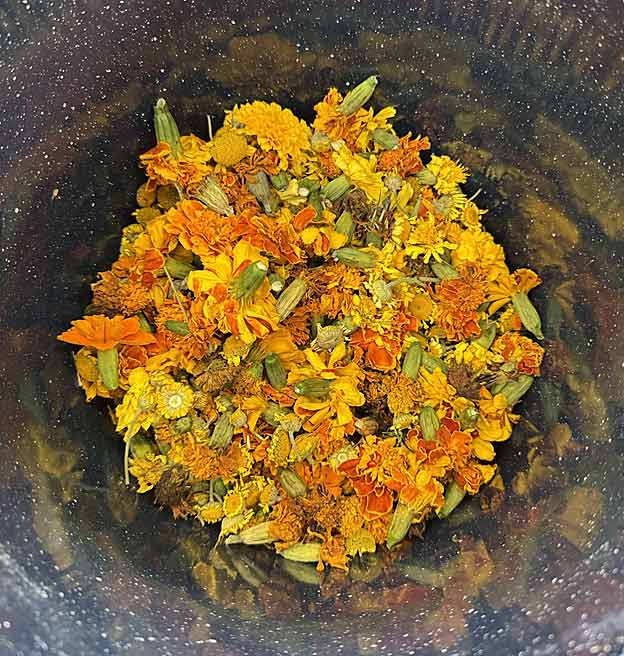
One of my favorite aspects of natural dyes is using waste from our vegetable production. Apple prunings bring soft lavenders and greys. Rhubarb leaves a rich in tannins, which can assist in the dyeing process and also make a lovely, soft yellow.
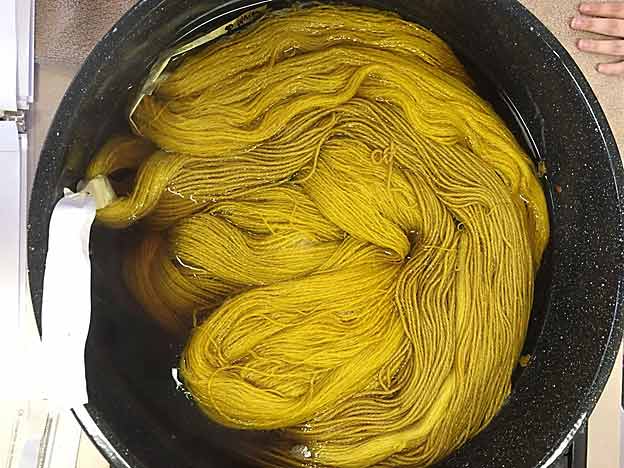
Onion skins are one of my very favorite dye materials. We have them in abundance on the farm and they produce lovely golds. I’ve also forage vegetable waste from our own staff lunches! Pomegranate skins and avocado pits make beautiful pinks and mauves.
I’m very proud that most of our colors come from this land. I do purchase limited dyestuffs that we can’t grow here, things like cochineal, which yield vibrant fuschias, and madder, which yield gorgeous oranges and reds. (Let’s have a moment of silence for our madder plants overtaken by Canadian thistle. RIP, madder plants). This year, I’m experimenting with sourcing reds from safflower and coreopsis.
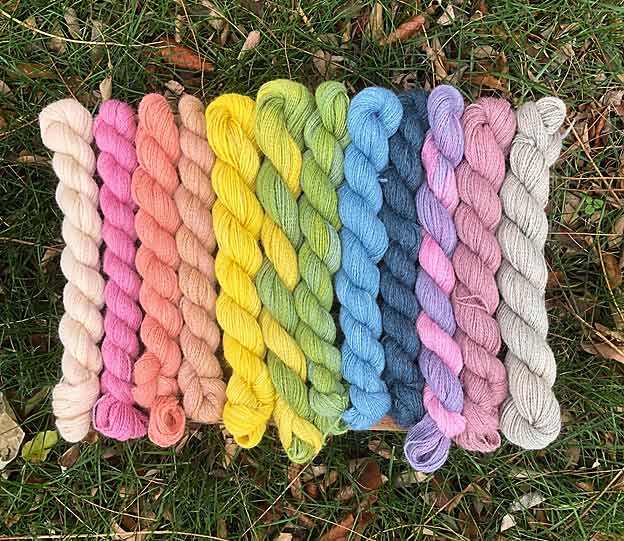
I’m always looking for ways to increase the variety of colors in our dyes. One way I achieve this is to overdye. I will use silver grey yarn to get beautiful heathered blues and corals. Golden skeins from marigolds or onion skins become bright green after a couple of dips in an indigo vat. My Little Pony pinks and purples come from cochineal and indigo. As cliché as it sounds, the possibilities really are endless.
We’re excited to announce that WVC will be hosting its first public natural dyeing class in 2026! Keep an eye on our events calendar for more details.