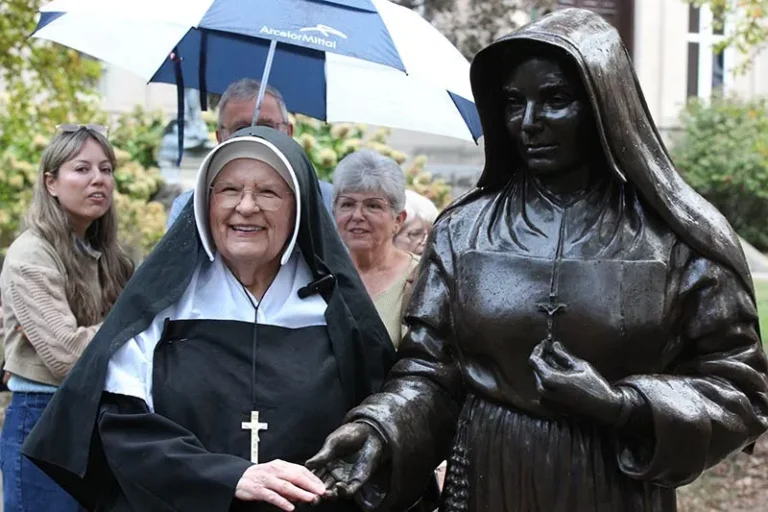
Note: The following piece was co-authored by Providence Associates Jane Fischer and Dr. Pearlette Springer as part of the 29th JUSTus Podcast.
Sisters of Providence Purpose Statement: The purpose of this Congregation is to honor Divine Providence and to further God’s loving plans by devoting itself to works of love, mercy and justice in service among God’s people. [Constitutions, article 3]
Sisters of Providence Mission Statement: The Sisters of Providence are a community of Catholic women religious who collaborate with others to create a more just and hope-filled world through prayer, education, service and advocacy.
Sisters of Providence General Chapter Vision Statement 2026-2031: We will co-create a world where every person’s dignity is honored and the sacredness of all creation is upheld.
Catholic Social Justice is grounded in scripture – in the wisdom of the Hebrew prophets and in the person and teaching of Jesus of Nazareth.
As two of NETWORK’s former executive directors, Sister Carol Coston, OP, and Sister Nancy Sylvester, IHM, have noted, the message of the Hebrew prophets was twofold: To denounce injustice and to announce a new way of being in the world.
In the New Testament, when Jesus says “The Spirit of God has anointed me to proclaim liberty to captives,” he identifies himself with this prophetic tradition (Luke 4:18). Likewise, as people of faith, we are called to denounce injustices when we see them and announce new, just ways of living together in community.
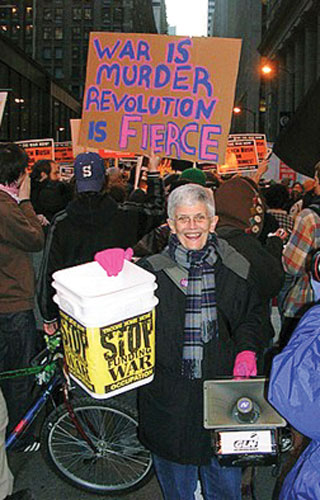
Pope Leo’s Encyclical Letter “Magnifica Humanitas,” dated May 26, 2026, mentions social justice 17 times. For the Christian community, social justice is a concrete way of following Jesus and remaining faithful to the Gospel.
In the New Testament, Jesus proclaims the “good news to the poor” (Luke 4:18) and identifies himself with the lowly, the sick, the imprisoned and strangers (cf. Matthew 25:31-46).
A litmus test for social justice today is the treatment of migrants, refugees and those forced to move due to poverty, violence, climate change and environmental disasters. The way a society treats them reveals whether its sense of justice is driven by fear or by the spirit of fraternity.
To explore how these principles can shape policies and communities, you can review the United Nations Social Justice Agenda or see how organizations like the American Public Health Association apply these principles to attempt to eliminate structural disparities.
Numerous Catholic and non-Catholic organizations work on social justice issues, depending on the specific cause you want to support. Most are non-profits, non-governmental agencies. Internationally known groups include the American Civil Liberties Union, the National Association for the Advancement of Colored People for civil rights and racial equality, the Southern Poverty Law Center and the Equal Justice Initiative.
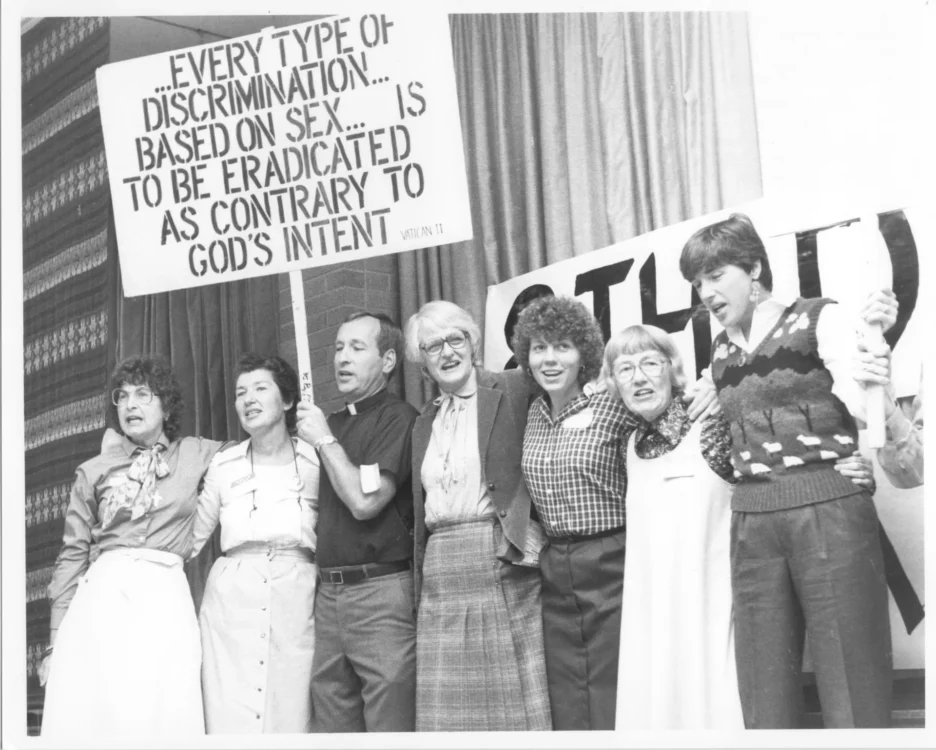
In the current movements for social justice, the emphasis has been on breaking the barriers that prevent social mobility, creating safety nets and implementing economic justice.
When speaking to Providence Associate Pearlette Springer, she reminds us that, “The Declaration of Independence, the Constitution and its amendments assign rights and duties to all citizens of the U.S. These institutions, in turn, have become the collective voice of the citizen. These institutions were not, are not, created to ensure the distribution of wealth and equal opportunity. Social justice wants to transform these institutions to ensure the distribution of wealth and equal opportunity.”
Social justice is the view that all individuals deserve human rights, equal opportunities and equitable treatment, regardless of their background. It focuses on breaking down systemic barriers that lead to marginalization, poverty and discrimination in all areas of society, such as housing, healthcare, education and the legal system.
The landscape of social justice is vast. Some of the leading organizations categorized by their primary focus appear below.
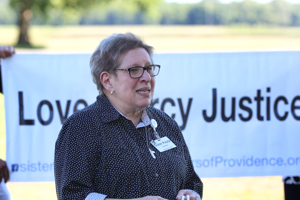
When we look back in history, we find that many religious groups perpetuated injustices in the name of their religious traditions and/or on behalf of the government.
Prime examples are their complicity in the Transatlantic Slave Trade and the Indian Boarding School. One exception to the rule was the Quakers, who were at the forefront of the abolitionist movement.
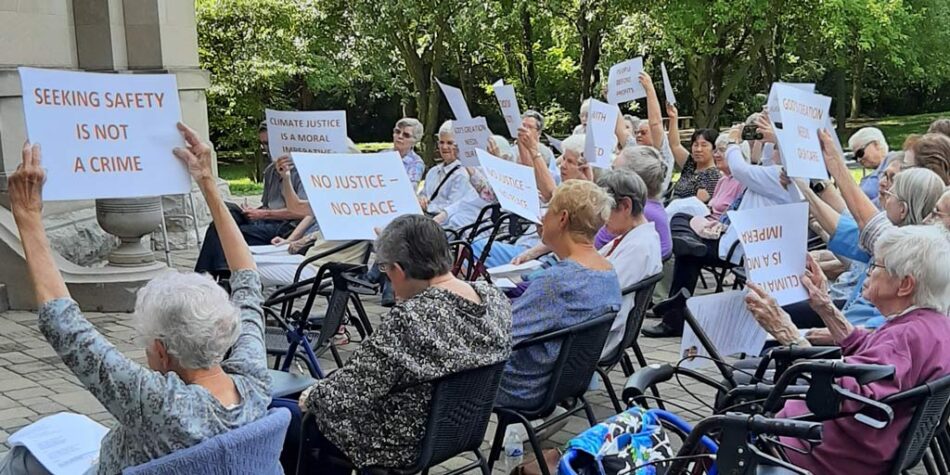
Slowly, but surely, that began to change and today, religious groups are the backbone of numerous civil rights, labor and anti-war movements. In the United States, faith communities — such as the historically Black Church, Quakers and many Protestant denominations — drive advocacy for racial equity and equality, economic justice, civil, disability, LGBTQ+ rights and environmental justice.
Here is how major religious traditions and organizations lead specific social justice initiatives today:
Since the Civil Rights Era, more and more women are interested in connecting the church to its social justice mission. Many women in the Catholic church are less satisfied with being committee members, baking cookies and serving at meals after funerals.
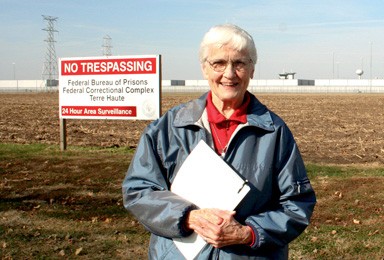
Women are seeking to use their gifts, talents and treasures in a more productive and purposeful way. In particular, they are searching for connection between Scripture, the human experience and the experience of God.
Women religious, in particular, have taken the lead in connecting the dots between the church and social justice. Some of the more active women religious groups and organizations include: Leadership Conference of Women Religious (LCWR), NETWORK Lobby for Catholic Social Justice, Catholic Women’s Council and the National Council of Catholic Women.
It has taken a long time for women to gain the momentum that leads beyond the communion rails. Many women religious have moved well beyond those traditional church roles, such as eucharistic ministers, lectors, ushers, cantors, directors of liturgy and religious education. Educating our young women on the potential of the laity early and often is key to keeping them aware of their calling to serve God and God’s people. Women in general, and women religious in particular, can transform the world into an equitable and equal society that recognizes the rights and dignity of all human persons and our oneness with Providence.
If you are interested in a religious vocation or learning more about Catholic women at the forefront of social justice issues, here are some steps you can take: