Whan the sunne shinth make hay. Whiche is to say.
Take time whan time cometh, lest time steale away.
John Heywood (oh, the irony)
This proverb is first recorded in John Heywood’s A Dialogue conteinying the number in effect of all the Proverbes in the Englishe tongue, 1546
Translation: Let us make hay while the sun shines. Seize the opportunity while you have ideal conditions.
Here at White Violet Center for Eco-Justice, a ministry of the Sisters of Providence of Saint Mary-of-the-Woods, Indiana, it happens twice a year.
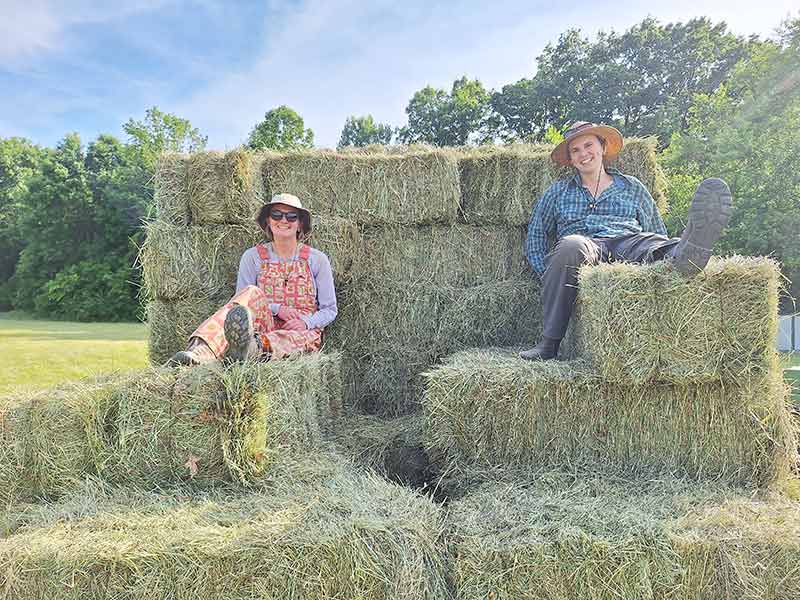
The goal is to have enough bales of hay for the alpacas to have as a supplement to their fresh pasture in warm weather months and enough to sustain them through the cold months when grass is, at best, scarce.
We hope for at least 400 bales throughout the year, but when Mother Nature doesn’t play along, we purchase what we need.
Once the timothy and orchard grasses along with some clover have matured out in the fields, we wait and hope for the weather to be in our favor. You want four days of sunshine with very low humidity and ideally, no or low chances of rain. Anything more than 20 percent is considered too risky and some prefer even lower percentages.
Rain during the three-to-four day process can ruin an entire “cutting” causing mold or spontaneous combustion after bailing if the moisture content is too high and it doesn’t dry properly.
This is especially common for the first cutting in the spring or early summer here in Indiana when pop-up storms or prolonged days of rain frequently occur.
For the second cutting in late summer or early fall, getting a four-day window with no rain isn’t as challenging, but we may have an issue with not having enough rain in July and August for it to grow well.
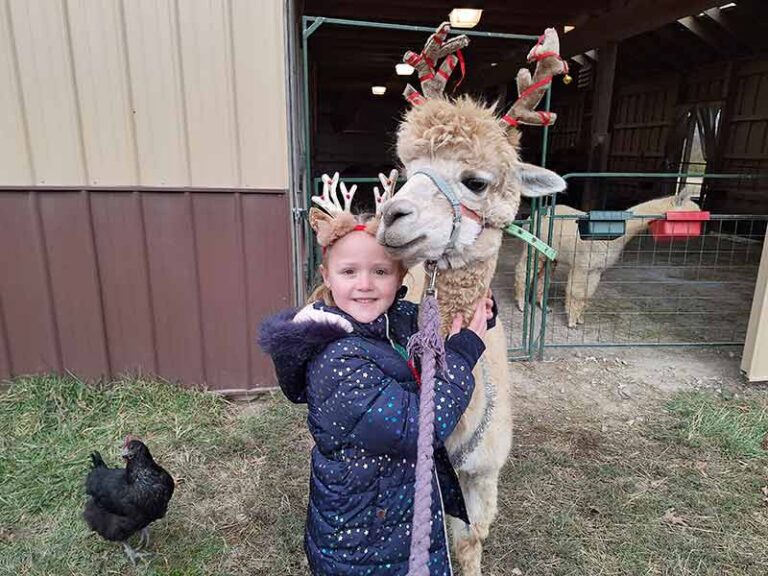
Those alpacas don’t realize how much their hay buffet depends on those ideal conditions and whims of the weather.
Prior to baling hay, John-Michael Elmore, Farm Operations Manager, has to go out to inspect the aging pieces of farm equipment to be sure they are up to the task and can perform their respective duties.
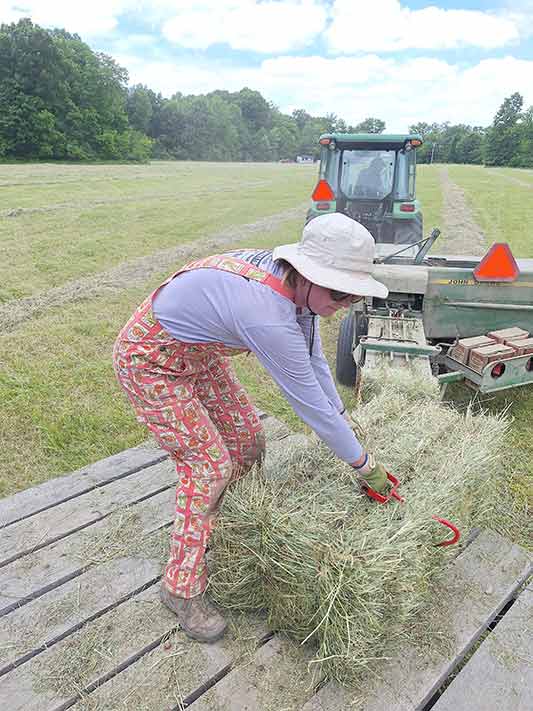
We need five key pieces of equipment to make it all happen: The tractor, the mower, the hay tedder, the rake and the hay baler.
Once baled, we also have trailers we stack the hay on to get it out of the field and put it somewhere covered to dry even more until we are confident we can put it in the haybarns without any issues.
Baling hay is hard work. There is a lot of pulling, pushing, lifting and shifting to stack the square bales up on the trailer and all the while the whole thing is in motion, bobbing up and down in a sea of grass.
Opting to bale during my internship was a formative experience. It felt like a rite of passage. I had family that had farms that I helped with when I was young, doing garden work or caring for their animals, but I had never been a part of this process. I felt a sense of accomplishment that first time.
It is not for the faint of heart. It is physically demanding, it is hot and your muscles are sore. It has its risks and it will plague your sinuses for days. But it is so rewarding to have that experiences.
In talking with other interns, I have heard them say it really makes you feel like a farmer and that it is like earning your stripes. Getting to teach the interns who are willing to participate each season brings me such joy and satisfaction, especially getting those stacks just right.
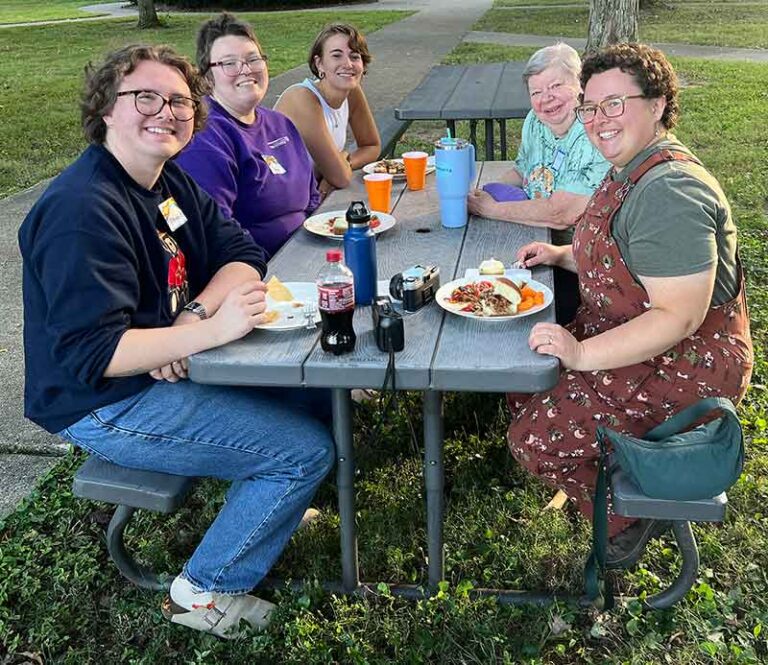
Haley Wagner and Clara Barber-Sweder were the interns that signed up a few weeks ago for the opportunity.
“It’s definitely hrd work but so much fun and rewarding,” Haley said. “I never expected to see myself baling hay, but it felt like a farming rite of passage and I’m so glad I had the opportunity to do it!”
Clara confirmed it was a blast! And we know that the alpacas certainly appreciate it!