

A historical look at our Greenhouses
The first time I came to White Violet Center, I got lost. I thought I was following the directions from my printed-out emails (ah, the days before smart phones), but after marveling at the tree-lined avenue and the gorgeous old buildings, I realized I had taken the wrong exit and was at Saint Mary-of-the-Woods College.
I slowly wound around the roads, hoping I was going in the right direction. Eventually, I rounded a corner near a handsome brick warehouse and found myself in front of a greenhouse with roses and irises surrounding the entrance and knew I must be in the right place.
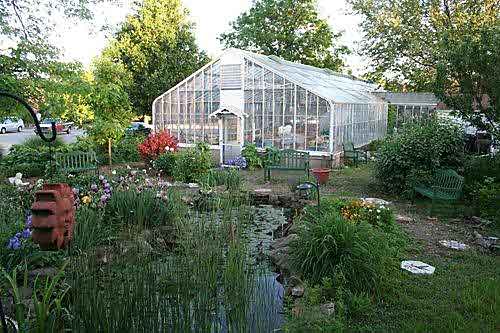
White Violet Center’s original greenhouse was constructed just north of the power plant in 1953, using a frame from a greenhouse originally built in 1919 south east of Providence Hall. It was a thing of beauty, with gothic-peaked doorways framed by bushes to the south, a perennial flower garden to the north, and a water feature tucked on the west side.
Inside, wooden benches lined the length of the building, running north and south, with ancient steam pipes cranking out heat below. The interior soil beds grew tomatoes, beans and flowers. In the center of the greenhouse, facing west, was a small breezeway with grow lights and concentrated heat pipes – a hot zone for plants that required more warmth to thrive.
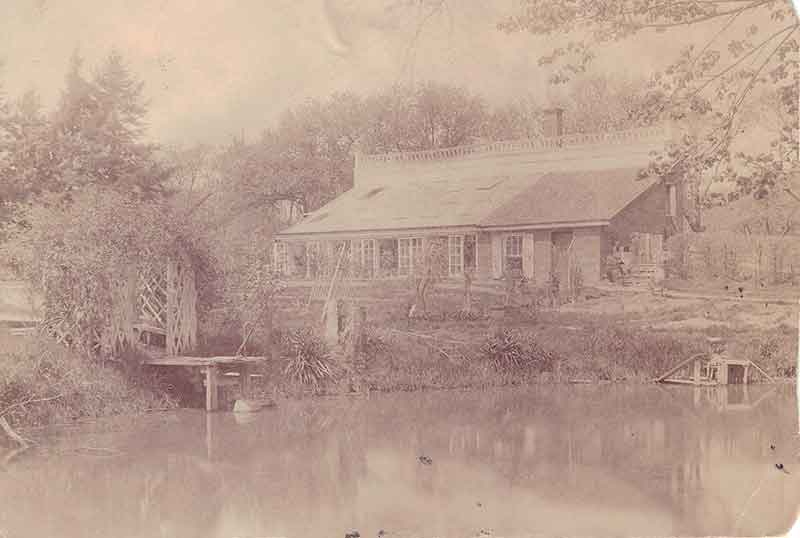
The first greenhouse at Saint Mary-of-the-Woods dated back to 1849. Built by Father Pere Michel, it was located near Saint Anne’s Shell Chapel and housed a variety of plants used for botanical study. Another greenhouse was built in 1908 exclusively for flowers, with additional greenhouses joining the ranks in 1919, one of which became the frame for the greenhouse that I would meet 85 years later. That fateful greenhouse was also the reason that White Violet Center came into existence.
In 1979, Sister Agnes Celeste Clouster was tasked with managing the greenhouse. She believed in the healing power of growing things and guided clients from Hamilton Center into horticultural therapy. She also worked with sisters as they navigated the challenges of coming home to retire, helping them find peace as they grounded themselves in the soil. In 1980, she applied for a grant to rehabilitate the greenhouse so she and other sisters could continue with this therapeutic work.
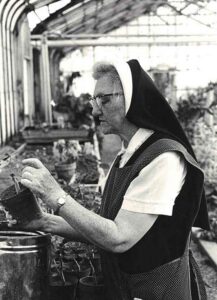
By the mid-1990s, the greenhouse had fallen into disrepair a second time. Many of the glass panes were broken and actively falling in. It was a dangerous place, and the sisters were instructed not to use it anymore, but if you’ve ever met a Sister of Providence, then you know they are often characterized by a strong will.
Sister Agnes Celeste refused to leave the greenhouse. As White Violet Center’s foundress, Sister Ann Sullivan, would tell, Sister Agnes would sneak over in the night to tend to her violets and geraniums. Little did she know that Sister Ann Sullivan and others were sowing the seeds that would become White Violet Center for Eco-Justice. Sister Ann knew a farm had to be at the heart of this eco-justice center, and farms need plants and plants need a greenhouse.
By 1994, Sister Agnes’ health had declined and she wasn’t able to sneak away to the greenhouse anymore. Luckily, her persistence kept the structure standing long enough for the Congregation to give their blessing to make the dream of White Violet Center a reality. (As the sisters say, it was Providence!)
Plans were made to rehabilitate the greenhouse and remodel the adjacent potting shed and workspace to be the original location for White Violet Center. Sister Ann went to Sister Agnes as she neared the end of her life, and told her that they were able to save her beloved greenhouse. Sister Agnes exhaled a sigh of relief and declared she could now die in peace, which she soon did.
By 2010, the twice-refurbished greenhouse was on its last legs. Many of the plexiglass panels were leaking or broken. The wooden support beams were rotten. The original boiler that fed the steam heat no longer functioned, and staff had to utilize a system of plastic sheeting, humidifiers and space heaters to get plants going.
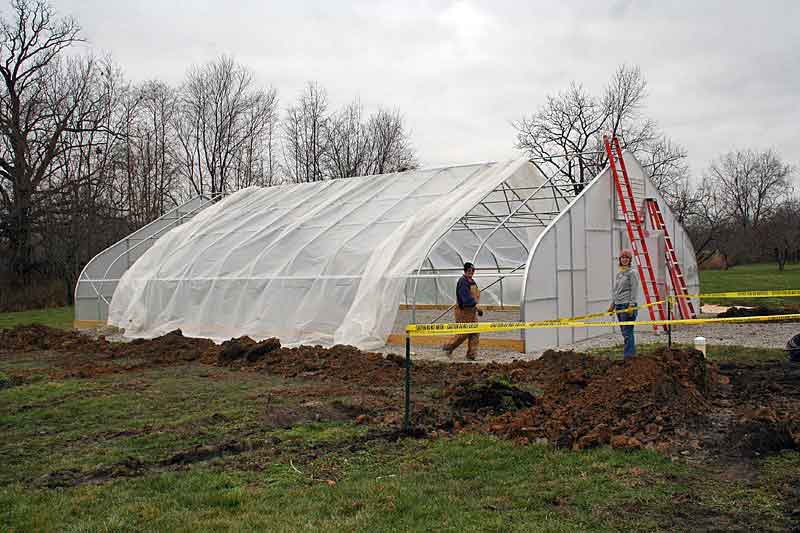
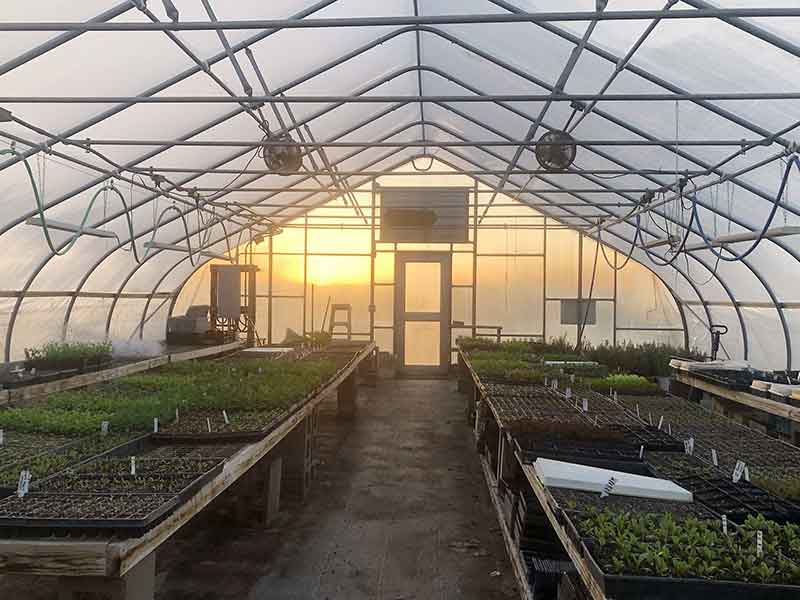
The price of construction materials had more than doubled in the previous 15 years and the cost for refurbishment was well beyond the sister’s budget. After three resurrections, the greenhouse was at the end of its life. In 2011, a donor came forward with a substantial gift for the sisters to purchase a new, larger greenhouse. We made way for the new greenhouse in a gap in the west orchard, much closer to the garden. This structure was completed in time for the 2012 growing season and it’s been the backbone of our farm ever since.
I often miss the old greenhouse and I still think of Sister Agnes Celeste as I’m tending to our plants. We have a framed collection of portraits of sisters who cared for the greenhouse in the years before White Violet Center took it over. I like to think their spirits are still out there with us, checking on the plants in the night.
Many thanks to the Archives Department for supporting the historical information and documents.


Thank you Candace for your informational piece. I always enjoy learning more about our history.
I do remember Sister Agnes Celest e working in the greenhouse but I did not know about her therapy program. Thank you again.