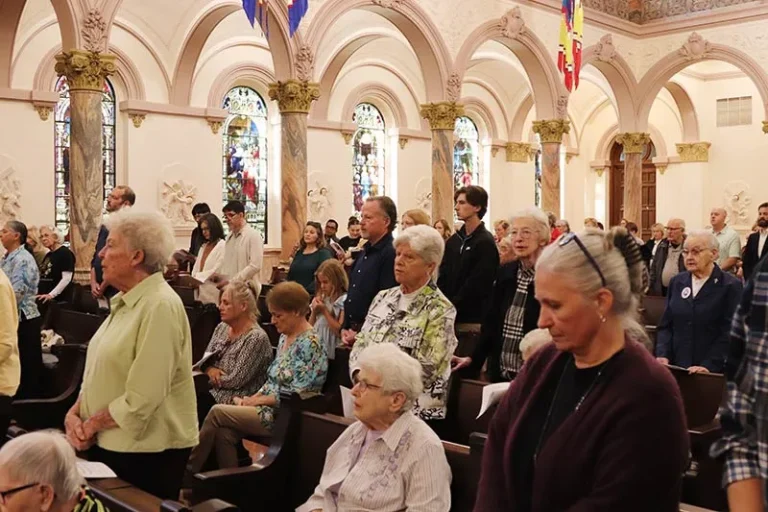
Note: The following piece was co-authored by Providence Associates Jane Fischer and Suzie Ray as part of the 31st JUSTus Podcast.
Catholics in the United States, like other Americans, are getting ready to vote in the midterm elections this November. As with every election season, the U.S. Conference of Catholic Bishops (USCCB) is emphasizing its statement titled “Forming Consciences for Faithful Citizenship: A Call to Political Responsibility from the Catholic Bishops of the United States.” This year, the bishops have introduced new resources for clergy to help them prepare their parishioners for voting. The guide is called “Outlines for Clergy Formation on Faithful Citizenship.”
State Catholic legislative conferences and dioceses frequently provide voter resources and election guides tailored to local and state ballots. For instance, organizations like the Minnesota Catholic Conference publish state-specific resources to assist voters in applying Catholic principles to the upcoming election.
Mail-In Ballots: As of this writing, mail-in ballots will be processed as usual. Placing a first-class stamp on a mail-in ballot will not bypass any USPS plans or regulations. However, it’s important to follow the specific mailing instructions provided for ballots to ensure they are processed correctly.
The federal administration has been pushing the federal court to enact new mail-in voting restrictions for the midterm election, but so far the Supreme Court has rejected efforts. The ruling released Monday, September 14th, by the high court means the U.S. Postal Service is expected to continue delivering ballots as usual. If you are using a mail-in ballot, ask about the postage required and for alternative drop-off locations that eliminate postage and delay.
So what do we need to do in order to prepare for voting?
Currently, the administration has stated that it has no plans to maintain a military presence at polling places. However, there is growing concern that the National Guard or the U.S. Military will be deployed to polling places in States where the Governor is a democrat, despite strict state and federal laws against such a move.
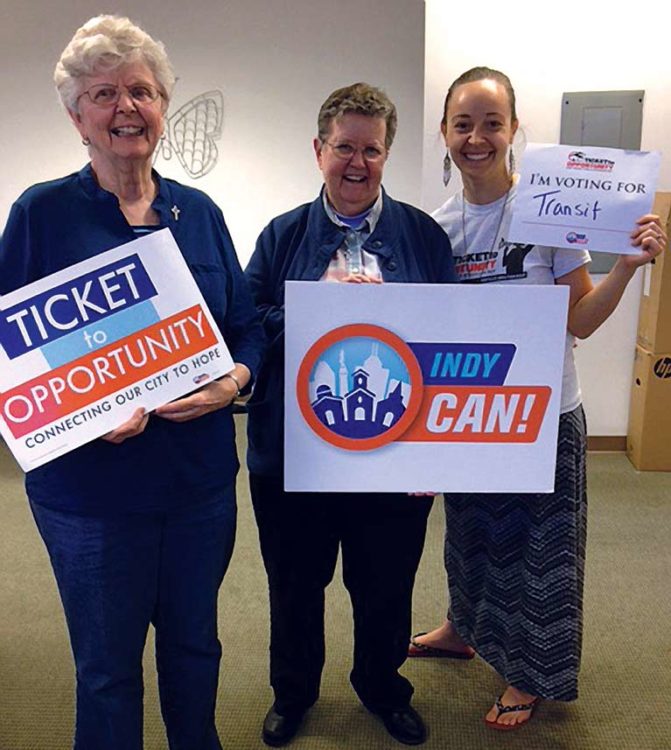
To be a good Catholic voter, review the resources available from your local Catholic diocese and state. The table below contains links to voter issues and guides for each state.
2024 – Bishop Raica: “The choices we make will affect not only our own lives but the lives of millions of others. Your vote matters. Your participation witnesses the values we hold dear in both Americans and the people of faith. I invite you to embrace this responsibility with hope, courage, and trust in the guidance of the Holy Spirit.”
Archbishop Andrew Bellisario, C.M.: “I suppose there are times to wait and overlook bad behavior, hoping the bad will go away. But there are times when we have had enough, moments when we, bishops, people of goodwill and faith, the world must raise our voices and cry out: stop it!
Bishop Emeritus: The Most Rev. Thomas J. Olmsted: “It is our duty to engage the culture, not run from it. We must place our trust in the Lord and know that by doing His will and speaking the truth in love, God will make all things work for the good. It is also the duty of the Catholic faithful to support courageous people who do this through both our actions and prayers.”
Bishop Anthony B. Taylor: “By voting, we remind politicians that they have to take our concerns into account; if we don’t vote, we are likely to continue to be ignored, and some will feel free to actively promote policies that continue to do us harm.”
Bishop Jaime Soto’s statement on Immigration Executive Orders: My brother priests and I will remain focused on shepherding the communities entrusted to our care. It has been the Catholic tradition to provide places for people to worship without fear, to learn without distraction, to find healing without shame, and to be a good neighbor for all. Belonging to a community is a fundamental expression and affirmation of the dignity of every person. See also Conference Statements.
Vote YES on the following State Propositions:
Proposition 133: Children are Not for Sale Act [Trafficking];
Archdiocese of Hartford Catholic Public Policy Office Wins: Senate Bill 295, Abortion/Gender Identity Shield Law. (The bill died on the Senate calendar)
Physician-Assisted Suicide Law: Following prior legislative approvals and pushback from the Diocese of Wilmington, Delaware’s physician-assisted suicide statute officially went into effect on January 1, 2026. The Catholic Church heavily opposed the measure, maintaining that it violates core teachings on the sanctity of human life.
The 2026 Voter Guide reports the following: Florida voters have the right and responsibility to participate in selecting their elected officials from those candidates who have come forward to serve their communities.
The Georgia Catholic Conference page lists 13 State bills with advice to ”Support” or Oppose.”
Religious Exemptions: Lawmakers introduced bills such as SB2472 that target religious exemptions for immunizations, seeking to expand protections for bona fide personal religious beliefs beyond those of officially established traditional churches.
Sharon Har is passionate about affordable housing.
The former state legislator, who served in the Hawai‘i House of Representatives from 2006 to 2022, has joined Catholic Charities Housing Development Corp. as its housing development director.
Questions to ask candidates: Do you support….
The Church’s teaching on matters of social justice extends into a broad array of issues, as the Church has a responsibility to offer teaching to perfect the temporal order according to the Gospel.
The Legislative Scorecard reports on “How they voted on the issues.” A video report on the Kansas Catholic Conference Facebook page is here.
“As your Bishop [Peter Christensen], I must speak clearly: Prop 1 is radically pro-abortion and would legalize late-term abortions into the third trimester. If passed, Prop 1 would remove nearly all protections for pre-born babies and put vulnerable women at risk. This initiative is bad for parental rights, allowing abortions and other medical procedures for minors without parental consent. It would also rid Idaho law of the physician-only requirement to perform an abortion. Overall, Prop 1, if passed, would be devastating for the protection of human life and undermine parental rights. Prop 1 is too extreme for Idaho, and we must vote NO this fall on this ballot initiative.” Most Reverend Peter F. Christensen, M.A., D.D.
Catholic Conference of Illinois Key Votes: Abolition of Death Penalty, Civil Unions, Comprehensive Sex Education, Covering All Kids Program, Illinois Dream Act, Illinois Health Care Right Conscience Act, Income Tax Increase (2 bills), Marijuana Legalization, Medicaid Expansion, Occupational License for Former Inmates, POLST (Practitioner Orders for Life-Sustaining Treatment, Redefinition of Marriage, Reproductive Health Act, Scholarship Tax Credit, Taxpayer-funded Abortions, Temporary Visitor Driver’s Licenses, Tuition Vouchers.
Early voting begins in two weeks! Learn more about the three proposed changes to our state constitution that are on the ballot.
Visit the Catholic Diocese of Richmond to learn more and help form your conscience before voting: https://bit.ly/BallotQuestions-2026.
The Louisiana Conference of Catholic Bishops has published an online PDF of 2026 Legislative Priorities by Area. Brief explanations are given about Life & Dignity; Family, Community and Participation; Poor and Vulnerable; Restorative Justice and Immigrants; Work and Workers; and Care for Creation.
Portland Diocese US Bishops November Special Pastoral Message on Immigration. We are disturbed when we see among our people a climate of fear and anxiety around questions of profiling and immigration enforcement. We are saddened by the state of contemporary debate and the vilification of immigrants. We are concerned about the conditions in detention centers and the lack of access to pastoral care. We lament that some immigrants in the United States have arbitrarily lost their legal status. We are troubled by threats against the sanctity of houses of worship and the special nature of hospitals and schools. We are grieved when we meet parents who fear being detained when taking their children to school and when we try to console family members who have already been separated from their loved ones.
William E. Lori, Archbishop of Baltimore: “Faithful citizenship is really an invitation to know what the church teaches and then when you’re faced with ballot issues or the question of for whom to vote, you’re equipped to engage in prayerful discernment.
49-53 percent Catholic, home to vibrant communities shaped by Irish and Italian immigration. (Totus Tuus post)
The themes presented in Catholic social teaching, originating in Scripture and further articulated through Church Tradition, are represented across the nine advocacy principles that guide Michigan Catholic Conference’s public policy advocacy. These principles help Catholic voters understand current public policy issues through the lens of Church teaching.
Caring for creation and preserving natural resources.
The Minnesota Catholic Candidate Questionnaire for 2026 includes questions to ask of the following candidates: U.S. Congress (House and Senate), Governor, and State Legislative Candidates. http s://www.mncatholic.org/election2026
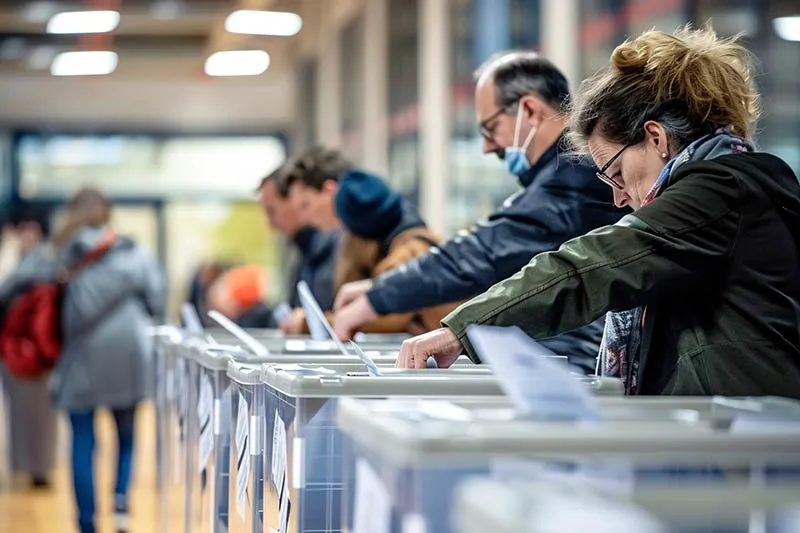
Ensuring ballot access for eligible voters is part of faithful citizenship. Article written by Kate Scanlon, 9/11/2026.
In November 2024, Missourians narrowly voted to enshrine a nearly unlimited right to abortion in the state constitution. Two years later, on November 3, 2026, voters will return to the polls with an opportunity to change course.
The U.S. House of Representatives passed its version of the 2026 Farm Bill Act (the Farm, Food and National Security Act of 2026). Unfortunately, it fell short here at home, failing to do enough to protect and strengthen the Supplemental Nutrition Assistance Program (SNAP), the nation’s largest anti-hunger program. Hunger is a daily reality for families around the world — and for many families in the United States. The decisions Congress makes in the Farm Bill will shape whether millions of children and parents can put food on the table. With the bill moving to the Senate, now is a critical time to speak up. As people of faith, we can use our Catholic voices to urge our Senators to protect and improve hunger-reducing programs in the Farm Bill — here at home and around the world.
Tom Venzor, executive director of the Nebraska Catholic Conference, wrote an article for the Archdiocese of Omaha’s Catholic Voice in August of this year. Upon being informed, he wrote: “Bear the light of Christ in the public square.” We want Christ to shape our social and political order. He also said the readership should “Get Educated on the Candidates and Ballot Issues.” The Catholic Conference does provide a link where users can search by ‘home address’ and ‘zip code’ to find a list of candidates. The most recent Catholic voting guide in search results is for 2002.
The Nevada Catholic Conference Facebook page advises “Vote No” on Question 6.
The New Hampshire Diocese has posted about voting on their Public Policy Page, but the entry is from 2024. Tom Venzor, J.D., Executive Director of the Nebraska Catholic Conference, has a session on September 17 at the St. Vincent de Paul Church in Omaha.
40 percent Catholic. (Totus Tuus post)
Take Action, Catholic Advocacy states the following: Advocacy is a vital part of our identity as a people of faith. Being “faithful citizens” means engaging our faith in the world and participating in civic and public life by making our voices heard through voting and advocacy.
New York Catholic around 35-40 percent. (Totus Tuus post on Facebook)The New York State Catholic Conference has a page that opens with a 2013 quote from Pope Francis: “We need to participate for the common good.” Sometimes we hear: a good Catholic is not interested in politics. This is not true: good Catholics immerse themselves in politics by offering their best so that the leader can govern.
Catholic Vote for North Carolina shows a Voter Guide for 2024.
The Catholic Diocese of Raleigh’s page states the following: The initiative highlights the Church’s teaching that Catholics should allow their relationship with Jesus Christ, Sacred Scripture, and Catholic social teaching to guide their participation in public life.
The Ohio Catholic Conference Voting page displays Important Dates and a link to Do’s and Don’ts on Voting. The Don’ts include:
Don’t Give Church Money or Support to Candidates for Political Office or to Officeholders.
Citing the violence in Haiti, Coakley wrote: “As citizens of this great country, we have been entrusted with a tremendous moral responsibility, and this is true most of all for you as our head of state, Mr. President. To this end, I respectfully ask: What good is the immense wealth, prosperity, and influence with which we have been blessed as a nation if not used in service of our humanity?”
“I think the role of Catholics in social and political life is the fulfillment of what the Second Vatican Council called for…the sense of participation of the laity in the life and in the mission of the church. — Archbishop of Portland, Alexander K. K. Sample.
The Pennsylvania Catholic Voter Guides page lists items from 2024.
Rhode Island: ~39-63 percent Catholic — the highest in the nation, with a strong historic presence. (Rhode Island’s Catholic Facebook page – Totus Tuus).
The South Carolina Catholic Conference “Your Vote” page is from 2024. The Roman Catholic Diocese of Charleston supports sections on “Letters to Lawmakers,” “Find your Legislator” and “Bill tracker.”
Bishop Scott Bullock says, “The combative tone of our political culture, especially on social media, causes some Christians to want to withdraw entirely from politics, thinking that it is too worldly, corrupt, or ‘dirty.” He addresses Measure 29 (marijuana) and Amendment G (abortion).
“As the Holy Father, Pope Leo XIV noted in his first encyclical, Magnifica Humanitas, we should support policies grounded in the equal dignity of every human person and ordered toward the common good through the principles of the universal destination of goods, subsidiarity, solidarity, social justice, and integral human development. A few policy issues that we may address include, but are not limited to, anti-abortion and pro-life positions, the need for comprehensive immigration reform, the need for affordable housing, school choice, non-discrimination, anti-violence, and a host of other moral positions embedded in our social teaching.” The letter was signed by Bishops Spalding, Talley, Beckman and Rick Musacchio Executive Director of The Tennessee Catholic Conference.
Daniel E. Flores, Diocese of Brownsville, Texas, and VP of US Conference of Catholic Bishops. “We need to remind them that we are first disciples of Christ ….” The Faith and Reason page reports on the 2026-2027 SC General Assembly and the bills supported by the Diocese.
USCCB Guidelines are incorporated in Alutia’s publication of the Utah Conference of Catholic Bishops. The article says: “Catholics are called to bring their faith into the voting booth, and to do so authentically requires some reminding about what the Church teaches.”
VermontCatholic.org has a Justice and Peace page that addresses “Forming Consciences for Faithful Citizenship.” There are several categories in this discussion, which include the following: “In the U.S., Catholics approach the public square with a faith-first lens, allowing our faith in Jesus, scripture, and magisterial teachings to help us put faith before politics.”
Most Reverend Michael Burge, Bishop of Arlington, says, “… from September the 18th to November the 3rd, two dangerous ballot initiatives will be brought before all voters.” The Bishop asks that people get to the polls early and “that you speak with family, friends, and colleagues, in truth and love, with a focus on activating and turning out those most likely to vote to protect life and the truth about marriage.”
Prudent Voting is located on the Washington State Catholic Conference webpage. Topics include Advocate for Life and Spiritual Food for Thought.
Rev. Evelio Menjivar-Ayala says, “The church’s responsibility during the Trump administration is the same it’s always been — to defend the human dignity of everyone.”
The “Faithful Citizenship” page of the Wisconsin Catholic Conference hosts the 2025 Public Positions.
OSV News, a Catholic wire and news service, in the pastoral letter, “Be a Merciful Neighbor,” Bishop Biegler wrote, “Rather than considering these issues through a partisan lens, I invite all of us to a deeper level of engagement as we reflect on the values that should guide our world, our nation and our state. As Christians, our convictions should be rooted in fidelity to the Gospel of Jesus Christ and our commitment to love God and neighbor.”