The Sisters of Providence have a rich heritage of good food and a long history of tending cows, chickens and bees, as well as growing fresh fruits, vegetables and nuts.
From 1935 to 1977 Sister Mary Henry Brames ran the cannery, which preserved the harvest that fed everyone on campus. With the help of many a novice she made jams, jellies, ketchup, chili sauce, vegetables and juices.
There was also a bakery on campus where Sister Mary Louise Yokum made beloved breads, pies, and cookies.
Although the times have changed and food independence has been replaced with food service companies for so many of us, echoes are seen in many of the Sisters traditions like the bake sale held at the annual Earth Day celebration.
So many sisters and others in the community bake delicious desserts for fundraising. I remember Sister Rose Marita’s Irish Soda bread fondly; she would bake hundreds of loaves for Earth Day, Linden Leaf Gifts and the Sisters each year during her retirement. When White Violet ran a community supported agriculture program (CSA), Sister Lucy Lechner would make the most delicious strawberry, blackberry and raspberry jams for the members.
Sister Mary Montgomery, our former intern director, made her famous fudge for the farm store and farmers market customers. For the handful of years she created it, it was the bestselling White Violet made food product and it was delicious!
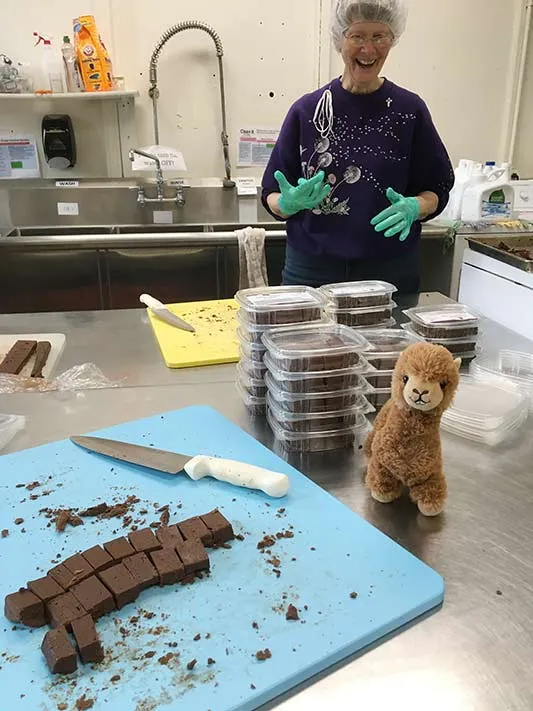
White Violet continues with new food traditions in our value-added product program (VAP). It may be hard to believe, but not all of the produce we grow is perfect. Some of it gets superficially damaged by weather, insects, or during harvest and cleaning. Other items are too small, unattractive or just odd: like three legged carrots or eggplants with noses (googly eyes are essential in these situations). Sometimes we grow more than we can sell and although we donate substantial amounts to Catholic Charities and Providence Pantry there is often some food left over. That is where I come in to save the imperfect and the overages from the compost pile, while reducing food waste. Soups, pickles, and pestos are perfect dishes to make something delicious, prevent waste and hopefully bring a little joy to the people who buy our products.
Sister Rose’s Irish Soda Bread (Makes 1 large loaf)

3 c. all purpose flour
2/3 c. white sugar
1 tbs. baking powder
1 tsp. baking soda
1 tsp. salt
½ c. raisins
1 tsp. caraway seed (optional)
——–
2 eggs, beaten
2 tbs. melted butter
1 ¾ c. buttermilk
Preheat the oven to 350 degrees. In a bowl, mix raisins with the dry ingredients. In a separate bowl thoroughly mix wet ingredients. Add liquid mixture to dry ingredients and mix just until flour is moistened; do not over mix. Bake in a greased loaf pan for 1 hour at 350 degrees. Remove from pan immediately and allow to cool completely on a rack before slicing. Enjoy
Butternut Squash Soup w/ roasted garlic, browned butter and sage
This soup is a White Violet Center favorite: a celebration of fall in a bowl. When I make it for the Farmer’s market and the farm store I don’t really have a recipe I follow and do a lot of measuring “with my heart” but the recipe below will get you to a good soup and you are invited to also measure with your heart.
1 large butternut or 2-3 small ones
2-3 large heads garlic
olive oil
water
4-6 tbs. unsalted butter
1 tbs chopped fresh sage
salt & pepper to taste
sugar to taste (sometimes the squash is bland and needs sweetness)
sherry or red wine vinegar and or plain yogurt or sour cream for garnish if you wishPre-heat oven to 375 degrees. Cut squash in half and remove seeds. Slice heads of garlic in half cross wise so that each clove is halved. Drizzle both garlic and squash with olive oil, salt and pepper to coat and place in a baking dish that is large enough for both and place squash and garlic cut side down and cover with lid or foil: bake for 30 minutes and start checking for doneness. The squash should be easily pierced with a knife and the garlic should be golden brown and squishy. Once fully cooked, allow to cool on a rack. When cool enough to handle, scoop out the squash into a large pot leaving the skins behind. Squeeze the heads of garlic into the same pot leaving skins behind. Add enough water to the pot to cover squash, add salt and pepper to taste and bring to a simmer over medium heat, stirring frequently. You may have to add more water later on to get the desired consistency. While simmering, prepare your browned butter. Be mindful during this step because browned butter can turn from the most delicious thing to the most burnt thing in mere seconds. In a small sauce pan melt butter over medium heat. Continue to cook butter, while constantly stirring, until the milk solids turn a deep brown. Immediately remove from heat, add sage, and stir for about 10 seconds. Pour into squash mixture. Use a stick or regular blender to blend the soup or whisk for a chunkier texture. Serve with a small drizzle of vinegar, yogurt or a spoon of sour cream; the acidity will brighten it up and cut through the richness. This soup freezes very well.