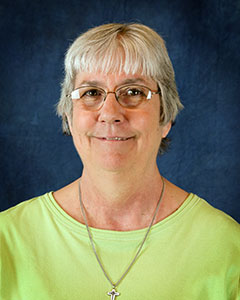
 Current ministry: math and science teacher, Providence Cristo Rey High School, Indianapolis
Years in the Congregation: 35
Contact Sister Maureen at: mfallonsp@fastmail.fm
Q. What do you like best about Saint Mary-of-the-Woods? Everything
Q. When I am not involved in ministry or officially at work, you are likely to see me … probably at Saint Mary-of-the-Woods
Q. I’m passionate about … teaching and learning
Q. What is the first thing that comes to mind when you think of God? Benevolent
Q. My best friend would say I am? determined
Q. Complete this sentence. Sister Maureen is … I would say funny, present, able, willing
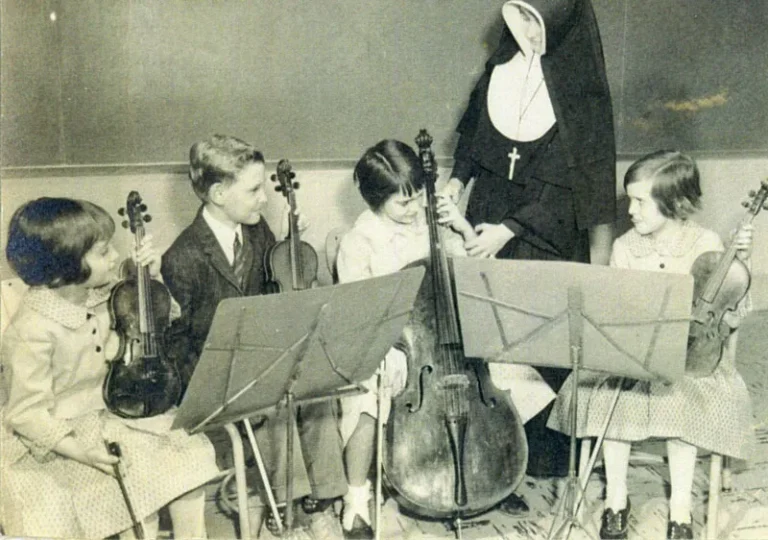
I’m an Irish Catholic Chicagoan, which defines a whole culture in Chicago. My parents and grandparents were Irish Catholic. So that was critically important to us growing up, both the Irish part and the Catholic part. My dad went to St. Andrew’s Chicago, so we were well-steeped in the Sisters of Providence from the time we were little children. We lived in an apartment until I was five then we moved out to the northwest side near O’Hare airport. When I was looking at high schools (not that I was looking, but I was that age) my Dad said I would go to Guerin High School in River Grove because it was conducted by the Sisters of Providence. I don’t recall there being any choice or discussion. Now that was part of the culture then too, but it certainly was his idea that I go there and not to the other all-girls’ Catholic school that was closer to our home. I think we were very well versed in prayer in my family. We would pray every day before we went to bed. I grew up in the era, the time when there were tons of nuns in grade schools and high schools. So you didn’t think about misbehaving, because you knew that if you had that thought, your parents would have a worse penalty for you than the nuns did, so you just didn’t have that thought. I went to Saint Mary-of-the-Woods College directly after high school, so I had 16 years of Catholic education, and 8 of them conducted by the Sisters of Providence, so I was pretty aware of the goodness of the community and the quality of the women I met.
Probably when I was in second or third grade. It was the thing to do because we had so many nuns on our faculty, but at the same time I wanted to be a fireman and a policeman and a nurse and a doctor … all those other things that we saw a lot of – but I think when I was in high school and I saw and experienced all these really great women, that is when I decided all the more. And certainly when I was in college I saw some very fine women, and once I was walking down the Avenue [at Saint Mary-of-the-Woods College] and Sister Margaret Sullivan said, “You’re going to be a Sister of Providence.” There was no question mark there; there was a period. So then I knew that something was up. When I began the process for entrance into the community, we were in provinces at the time, and the Chicago provincial was Sister Barbara Doherty whom I had for classes three years at Saint Mary-of-the-Woods College. So my questions and answers to her were very different than if she had been interviewing a stranger.
(Laughs) It was fairly unnerving because I was a fairly shy, I-didn’t-want-anyone-to-notice-me type. But it was also good because it was like the secret was out. There were a number of other people of my vintage in the college who were interested, who had expressed interest, but they were part of this more elite group of people (or so I thought). And then I kind of recall that Sister Margaret had arranged for me to meet people, or they just happened to be at the same table with me people who were the types you want to talk to if you are interested in that. It was just this quiet little arrangement.
She was my physics teacher. I had her twice for two physics classes, but all the sisters lived together, so I suspect they talked, maybe not; but I suspect because the college wasn’t that big, and the science majors were even fewer.
I think it has an attraction in terms of a witness value and a freedom to be of service that I don’t know that I could do in a lay context because of the prayer and community aspect.
1977. I worked for a year after college. I was the chemist at Culligan water softening and realized that working in a lab with test tubes was not appealing to me. However, paying off college loans was a necessity.
I think I was considering entering, but I was making sure that … ohh, I don’t know exactly what I was doing. My degree was chemistry, so I wanted to work as a chemist. And I didn’t see that that would fit into the ministry of the Sisters of Providence, because at that point they were like 95 percent educators.
No, not at all. When I was in college, I took a lot of chemistry, a lot of math and a lot of biology. I didn’t really have room for education classes, and I kind of chose it that way, maybe. Because if I wasn’t an educator, then they wouldn’t take me, because they only took teachers. Well, they got me anyway, and I had to take the coursework later.
Yeah, trying to be deceptive to God; it just doesn’t work.
Well, when I look at so many of the sisters who were at the college and who were at Guerin High School, they were like, really good women. Like really accomplished in their field and really modeled everything you want to be when you grow up. I was 21, 22, what did I know? Nothing. And then I’m wanting to say yes, I want to be with these people who were accomplished women! Like, was I crazy?
Well I was meeting with Sister Barbara Doherty and she gave me some papers to fill out and she said, “Well it’s either now or never.” And they were the papers for entrance! And I looked at her and I said, “Well, I guess it’s now.” What do you do? The provincial says it’s now or never. And it was someone that I knew, so I was like, well maybe I should fill these out.
23
I think it was more a surprise. We don’t have in our family anybody who’s a vowed religious, although my parents were religious people. Nobody in my family ever promoted the idea that one of their children or grandchildren would join religious life, because that was kind of like something that you did in the 50s or 60s, not something that you did in the 70s. I knew people from the college who had done it, so that helped a lot. But it was more like I was very hesitant. Like would they accept me? Would they say yes? Because I wasn’t a scholar, and I wasn’t outgoing and I wasn’t accomplished. I was just a very ordinary and very, very quiet person. Why would God call me? I’m just ordinary. And then why would the Sisters of Providence say yes? So it was more a surprise.
Well, when I was in college I had sent away for literature for a lot of religious communities doing all kinds of wonderful works in the Midwest, and the East, and I looked at the literature and I was like, good for them; I’m glad that those communities do those things. And I think I wanted to know what other people did, but I didn’t feel called to inquire of those communities. And we had a weekend on our campus for college girls who might be interested in religious life. Someone suggested that I go, now I don’t even remember who that was (maybe Sister Kathleen Desautels), and I was like, ‘Oh, OK.’ But when you go to this, and we would call it now a Come and See weekend, it is just like go and listen and check it out. And it felt OK. So I think the more I was with the idea, the more it felt OK. And I think even reading the literature of the other communities whom I had never met, it was like that was nice, but I did not feel any attraction to their congregations or to their literature; it didn’t speak to my heart. I guess because I like to see the witness value. Like I want to see the people I am going to be with. I want to listen to them. I want to watch how they are. And that was very attractive to me. And the first couple of years I was in the congregation, I was at Maternity BVM in Chicago with people who are very dedicated to their ministry, to their prayer and to their community. And those were all things I enjoyed being with.
I think part of it was that I grew up listening to my father talk about the Sisters of Providence and how indebted he was to them, but also how much he admired them. My mother had gone to a Catholic grade school with another community, and she did not have that experience at all. We went to a grade school that was staffed by another congregation, and that was not our experience there. So it was something about the Sisters of Providence, who could present themselves in a way that was admirable, that I appreciated.
Well, I think what I know now is that it’s part of my responsibility to witness to the life and mission and ministry, where when I was younger, I could enjoy the mentoring. We didn’t call it that then, but that was what it was, of the – I don’t want to call them older sisters because they were in their 40s – but they were way older than I, who provided great example and when I was wrong would tell me in such a kind and just way. Now I really feel a responsibility, a giving back to not only the future generation but also the sisters who are retired here. How do we continue the mission and ministry and the zeal that many of the sisters had for decades?
No, I was never completely sure. But I kept trying, and I think that that effort and that progress was what helped me to calm down in my fears of “I don’t belong.” I can remember my first night there I was like, “What am I doing here?” and then the second day I was for sure, like “Why did I do this? This is craziness.” But I think after a while I realized that I had become well versed and well prepared to live a life of prayer and intent in community that I just don’t give the worry a lot of thought any more.
I’ve taught high school my whole life, in Illinois and Indiana. I’m from the era where I lived in big houses, we would call them big houses, where maybe 10, 12, 15, 19 sisters lived. I taught in Evansville, Indianapolis, Chicago. I’ve taught in SP institutions, schools where SPs traditionally were and schools where SPs never were. But I always taught high school. Well, I taught grade school once – not my cup of tea.
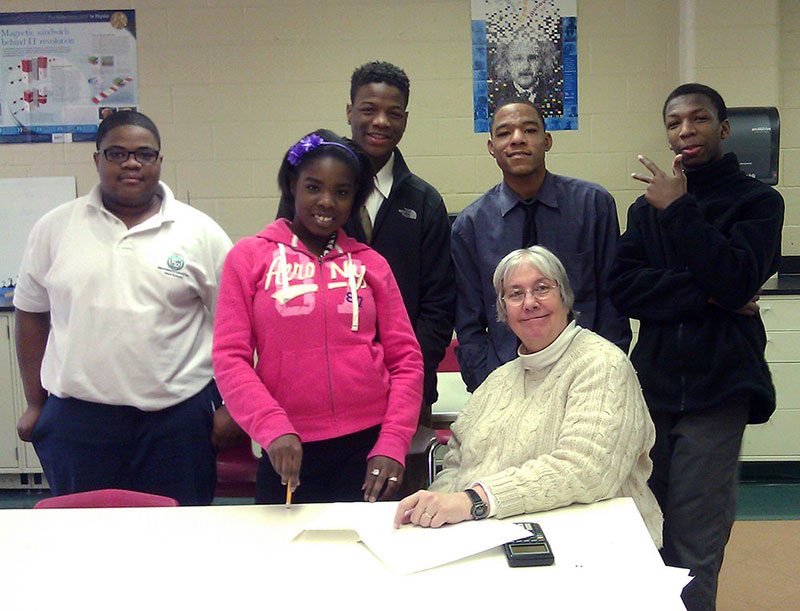
I did. I was just saying this at breakfast. When I was a postulant I taught junior high math and science and I started to count the number of days left in the middle of September, so that was not a good thing. But it was a very challenging class, and I did the best that I could considering I was green as grass. And then when I was a novice I was discerning with a superior, and I said, “I don’t want to teach.” And she said, “Well, what do you want to do?” and I said, “I don’t have any idea, but I don’t know how to teach, I can’t teach, I don’t want to teach. Thank you.” And it was that was it — period. But I was a novice and she was the superior, so that was not the end of her discussion. After we had met several times and I was still at “I don’t want to teach, you don’t understand this, Sister. Thank you.” She said, “I will give you an option. Do you want to teach, or do you want to teach?” Now in my naiveté I thought there was an option there. And I must have looked at her like, “No, it’s not going to work. You don’t understand, I don’t know how to do this.” She said, “We’ll send you to a good school, you’ll live with good people, they can help you out. And if it doesn’t work out, call me in December and we’ll figure something out. Well that was 1980, and I’ve been doing it ever since, so I guess she gave up waiting for my call. But it was simply that I didn’t know how to do it; it wasn’t that I couldn’t do it. It was that I didn’t know how.
Experience and people helping me. The first year I was teaching I had one sister who would help me organize my chemistry lessons to present them well, and another sister who would help me with my geometry lessons so I would present them well, and another sister who would help me with the classroom issues. When you have that level of help, you can’t help but learn how to do your task. And what a gift that was that you can’t even imagine. And people who readily said, well come here I’ll show you how to do that. They didn’t wait for me to say, “I don’t know how to do that.” They just said, “Come here, we’ll show you.”
That’s a great question, because in the beginning, I don’t know that I envisioned anything. And then as the years progressed would I have envisioned that I’m still teaching when it seems everyone else seems not to be? I don’t think I would have done that. You know, or when somebody says, you’re still teaching? To say, that’s OK, and it’s OK that I’m still doing that. It’s not a bad thing. It’s a good thing.
I think so. I think very much so. For which I’m very grateful. Because I lived with some really great people spiritually also who tugged me along when I was in those waning days … and I don’t know if I ever even vocalized I can’t or I don’t know, but they just kind of anticipated that and gently took care of that.
For me I think one of the benefits is being able to come here to Saint Mary-of-the-Woods all the time. And to have a place of history and heritage and hospitality where I know that I can come when I’m tired, when I’m awake, when I’m happy, when I’m not happy, and know that I’m welcomed anyway. And to know that the heritage of Mother Theodore and the sisters who have gone before me is what sustains me a lot of times. I’ll go out to the cemetery and I’ll think of somebody and I’m like, “Can you help me with xy and z situation?” And then the next day, that situation is a little better.
Gettting to come here. And I think really the heritage of Mother Theodore. I went to Guerin high school but I don’t know that I really learned a lot about Mother Theodore at that time. I think the gentleness with which Sisters taught me different things. When I was in college and the sister was talking about Mother Theodore Guerin and I was listening to what she said, and I raised my hand and I said, “Is that who Guerin High School is named after?” And what could she say, she said, “Yes Maureen.” Where it was an answer with love and understanding rather than an answer with sarcasm or anything like that.
Well I think just the sustaining in education. Some of the schools she went into were challenging for her. And some of the schools I’ve been in have been challenging for me. And to know that with faith you can make it through the challenges is really helpful.
God never gives you more than you can handle, I think because you don’t have to handle it alone.
That I have two brothers who still pick on me even though we’re older – that’s their favorite appointed task in life. But that I’m part of a family as well as part of a community. Years ago it seemed as if when you came to the community you sort of left your family behind, now you don’t. You can bring the family stories in. And your families can visit your ministry sites and Saint Mary-of-the-Woods and feel really welcomed.
Be open to the call. And investigate. It takes great courage to say yes to something when you don’t really know what it means. What does it mean to live in a congregation rooted in prayer and ministry? But probably the good news is that you don’t have to live 50 years at one time. You live today, and if at the end of the day you decide that you are going to change your mind, it’s OK for a number of years to do that. And if you have a bad day today, well tomorrow will be good.
One would be paying off debts. I think for a lot of people it’s a big issue. They graduate college with thousands and thousands of dollars of debt. And then going against the grain. We talk about being countercultural. But joining a religious congregation or the priesthood is very countercultural. It’s not the individuality that one would think is indicative of people in their 20s or 30s. But yet we can be individual.
Study more. I think for a lot of time I was a wallflower – an underachieving wallflower. I knew enough to get by, but I didn’t want to be noticed, so therefore I didn’t study too much. And that’s just not a good use of God’s gifts. God did not put me on this Earth to be an underachiever.
Well, I’ve been there six years. We serve students of moderate means and give them an opportunity to to prepare for college and to be ready to succeed in college when perhaps they didn’t come to us that way. I’ve taught all the math and science classes that are offered.
Yes. It’s the first new school the sisters have had in a long, long time. Though it’s exciting, it’s also a huge responsibility when you think of the tradition that the Sisters of Providence Schools have had. And here we are opening a brand new school in an economic time when, like, why would you do that?
There were people in the Archdiocese of Indianapolis who always supported Catholic education for students from families without a lot of money. But the Deanery schools were not able to fulfill that need because they could not give enough financial aid. And in our school the students go to work one day a week at a major corporation to pay their tuition. Because of that component, then Catholic education is affordable to students of moderate means. And I think that approach makes it possible. And what we’ve realized is that the overwhelming generosity of the corporations and of the Catholic people of Indianapolis to want to give back to the next generation because of what they have received in Catholic education themselves. And some give back in a huge way and some give back by giving $20 a year or whatever they can give. But we have a nice cadre of supporters.
Sister Jeanne Hagelskamp is principal and I had worked for her before, and she runs a good school. I didn’t know what it meant to be in a Cristo Rey School. I didn’t know what it meant to say that you will get students who are not ready for college when they come and in four years you have to get them to be ready. I had no idea what that meant. So I can’t say oh yeah, I knew I wanted to … I didn’t have any idea. I had always taught in schools that were traditionally college prep even though that was never identified. Students would come from good grade schools into good high schools so it was kind of just a process. Here we’re just, we’re kind of providing a wonderful service to the students and to their families too, by not giving up on the students. At graduation last year so many of the parents said thank you so much for not giving up on their children, because their previous schools had.
I think it is the heart-to-heart conversations. There’s no treading on water to see if it’s OK to talk about this, you just go to the heart of the matter. And you can talk about things in such a way that you flit from conversation to conversation and they’re all based on Eucharist, and spirituality, and Mother Theodore, and ministry and Saint Mary-of-the-Woods.
Well I think there is a respect for the Eucharist that we have as a Congregation that goes beyond the Sunday Mass and the holy day Masses that we had when I was growing up. And there is an appreciation for good liturgy that we are blessed with here. And being able to, for example, say the prayer of reunion knowing that every other Sister of Providence and now Providence Associates says the same prayer. When you do the office everybody is saying the same one, on the same day, maybe not at the same time, but it’s a unified prayer.
I think it’s the witness value for me. I know that each individual person has a witness value in their life. When I have students who seem to understand the tie between religious life and prayer and spirituality and ministry, and they’re in high school, that witness value pays off.